

Yamazaki vs Hakushu: The Ultimate Japanese Whisky Battle (2026)
Sip & Learn: Volume 164
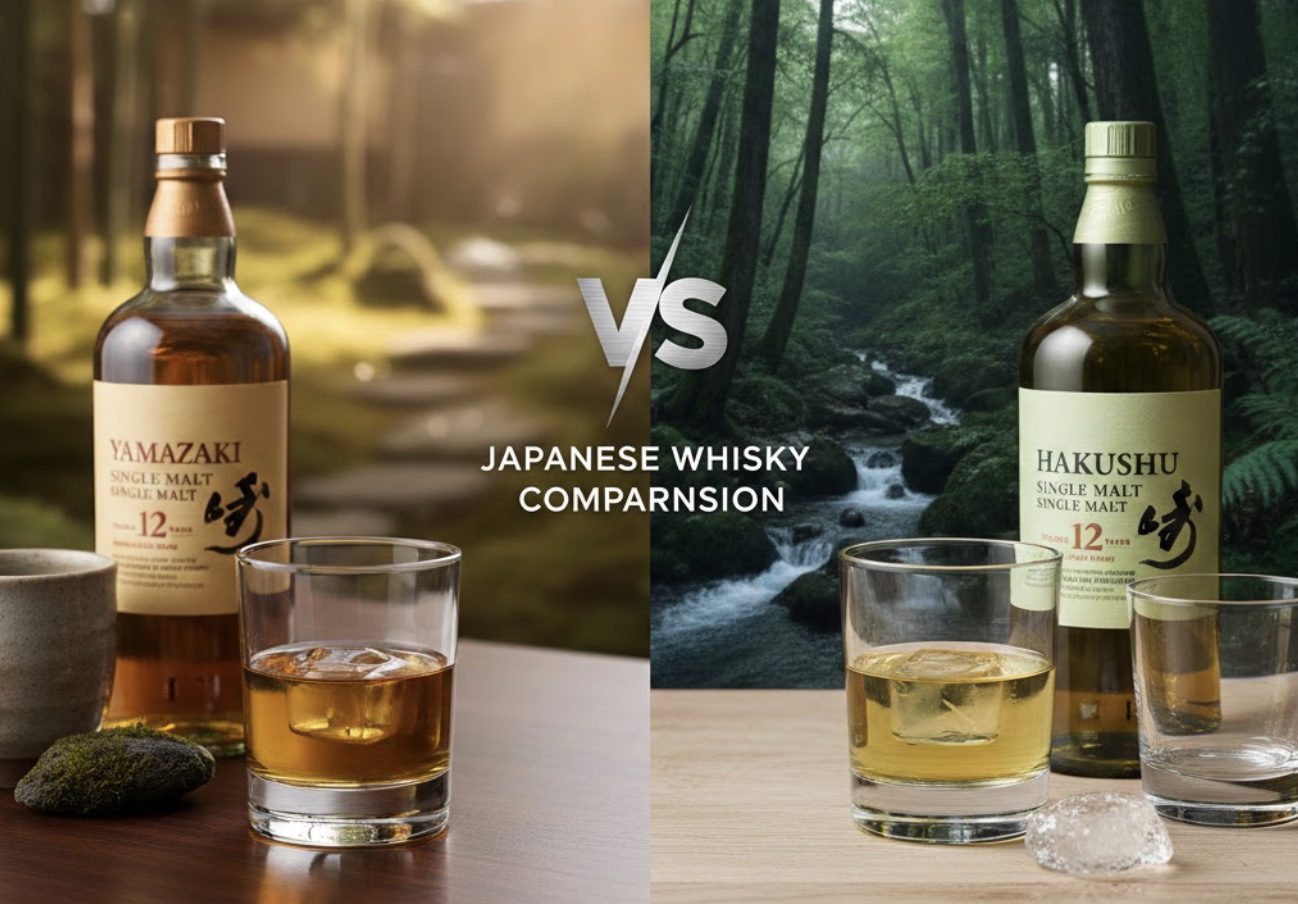
Suntory is the founding house of Japanese whisky. But within this empire, there are two distinct pillars.
On one side, you have Yamazaki, the elder statesman. It is Japan’s first distillery, famous for its rich, fruity, and sherry-influenced profile.
On the other, you have Hakushu, the mountain distillery. It is the green, herbal, and slightly smoky rebel.
In this guide, we break down the Yamazaki vs Hakushu rivalry to help you decide which bottle deserves your investment.
Table of Contents
Click below to jump to a section:
1. Location: Valley vs. Mountain
Terroir matters, even in whisky. The primary difference between these two spirits comes from their environment and water source.
Yamazaki is located in the Vale of Yamazaki, near Kyoto. It sits at the confluence of three rivers. The climate is humid and misty, which encourages a faster, more intense maturation. The water here is soft and legendary for its purity (it is the same water used for traditional Japanese tea ceremonies).
Hakushu is located high in the Southern Japanese Alps. It is one of the highest distilleries in the world. The forest microclimate is cooler and crisper. Maturation here is slower, allowing the spirit to retain a fresh, green character.
Understand Japanese history?
Read about the father of Japanese Whisky (Vol 45).
2. Production Differences
While both are owned by Suntory, their equipment is radically different.
Yamazaki is designed to be a “kitchen” distillery. It has multiple shapes and sizes of pot stills, allowing them to create a wide variety of heavy and light spirits to blend together.
Hakushu, however, uses wooden washbacks (fermentation tanks) to encourage naturally occurring lactic acid bacteria. This gives the whisky a distinct creaminess. Crucially, Hakushu also lightly peats their malt, giving it a subtle smokiness that Yamazaki lacks.
What is Peat?
Learn how smoke gets into the barley (Vol 18).
3. Tasting Notes Breakdown
If you are pouring these blind, here is how you tell them apart in the Yamazaki vs Hakushu showdown.
The Flavour Profile
- Yamazaki (The Elegant Choice)
Deep, layered, and multi-faceted.
Nose: Peach, pineapple, candied orange, and vanilla.
Palate: Coconut, cranberry, butter, and Japanese oak incense. - Hakushu (The Fresh Choice)
Crisp, vibrant, and cleansing.
Nose: Peppermint, melon, cucumber, and pine needles.
Palate: Yuzu citrus, grapefruit, thyme, and a wisp of gentle smoke.
4. The Mizunara Factor
Both distilleries utilise the rare and expensive Mizunara Oak (Japanese Oak).
However, Yamazaki is more famous for it. The Mizunara cask influence provides a specific note often described as “temple incense” or sandalwood. While Hakushu uses it, the note is often masked by the fresh herbal qualities of the spirit. In Yamazaki, it is the star of the show.
Why is Japanese Oak so expensive?
Discover the rarest wood in the world (Vol 92).
Summary: Which Should You Buy?
The battle of Yamazaki vs Hakushu is not about quality—both are exceptional. It is about mood.
Choose Yamazaki if you want a luxurious, after-dinner sipper that rivals the best Scotch single malts for complexity.
Choose Hakushu if you want something refreshing, perhaps to enjoy as a Highball with soda and mint. It is the “green” whisky for a reason.
Become a Certified Expert
Take your knowledge from “hobbyist” to “connoisseur.” Join our Virtual Whiskey Tasting VIP program and get guided lessons, rare bottle alerts, and tasting notes sent straight to your inbox.