
The Whisky Rebellion History: When America Fought Over Spirits (2026)
Sip & Learn: Volume 162
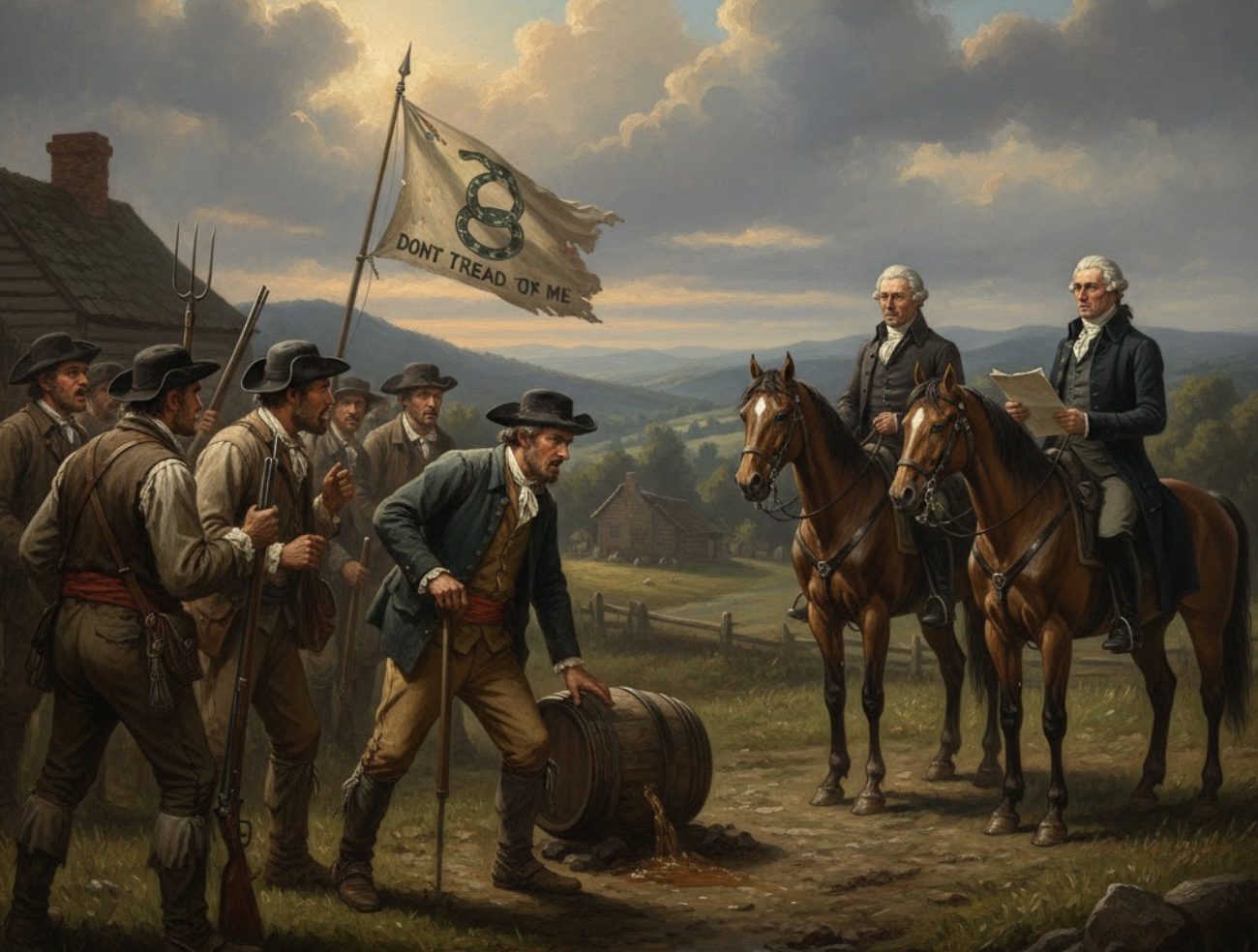
In 1791, the newly formed United States was broke. To pay off the massive debts of the Revolutionary War, Treasury Secretary Alexander Hamilton proposed a radical new idea: a federal tax on domestic spirits.
He did not expect that this tax would nearly tear the young nation apart.
The **Whisky Rebellion History** is not just a story about alcohol; it is the story of federal power versus frontier freedom. It is the reason why Kentucky is the home of Bourbon today, and it remains the only time a sitting U.S. President has led troops into the field.
In this guide, we look back at the conflict that defined American whiskey.
Table of Contents
Click below to jump to a section:
1. Liquid Currency
To understand the rebellion, you must understand the economy of Western Pennsylvania in the 1790s.
Farmers grew rye and corn, but transporting bushels of grain over the Appalachian Mountains to Eastern markets was physically impossible. The roads were poor, and the grain would rot before it arrived.
The solution was distillation. By turning grain into whisky, farmers created a product that did not spoil, was compact to transport, and was highly valuable. In fact, whisky was often used as currency to buy goods, land, and services.
What is Rye whisky?
Learn about the grain that started it all (Vol 22).
2. The Farmers’ Fury
When the “Whisky Tax” was passed in 1791, farmers felt targeted.
The tax was structured in a way that favoured large Eastern distillers who paid a flat fee. Small frontier farmers, however, had to pay by the gallon. Since they operated seasonally, this cost them significantly more per unit.
Violence erupted. Tax collectors were tarred and feathered. The home of tax inspector John Neville was burned to the ground. By 1794, thousands of armed rebels gathered near Pittsburgh, threatening to leave the Union.
“Such a resistance is treason against society, against liberty, against everything that ought to be dear to a free, enlightened, and prudent people.”
— President George Washington
3. Washington Rides West
President George Washington knew that if the government could not enforce its own laws, the new nation would fail.
In a show of overwhelming force, Washington federalised 13,000 militia troops—an army larger than the one he commanded during the Revolution. He rode at the head of the army towards Pennsylvania.
Faced with such might, the rebellion dissolved. The rebels fled or surrendered without a major battle. It proved the federal government had the power to levy taxes and enforce order.
George Washington’s Distillery?
Did you know the President was the largest distiller in America? (Vol 75).
4. The Move to Kentucky
While the rebellion was crushed, the resentment remained. Many of the “Whisky Boys” refused to live under the watchful eye of the federal government in Pennsylvania.
They packed up their stills and moved further south and west, into a territory that was then part of Virginia: **Kentucky**.
There, they found limestone-filtered water and ideal conditions for growing corn. This migration is the direct reason why Kentucky became the heartland of American Bourbon, while Pennsylvania remained famous for its Rye.
Why Limestone water?
Read why Kentucky water makes better Bourbon (Vol 08).
Summary: The Aftermath
The **Whisky Rebellion History** is a reminder of how central spirits are to American culture. The tax was eventually repealed during the Jefferson administration, but the impact was permanent.
It established the authority of the federal government and inadvertently created the Bourbon industry we know and love today.
Become a Certified Expert
Take your knowledge from “hobbyist” to “connoisseur.” Join our Virtual Whiskey Tasting VIP program and get guided lessons, rare bottle alerts, and tasting notes sent straight to your inbox.