

The Truth About Whisky Decanters: Essential Guide & Safety (2026)
Sip & Learn: Volume 41
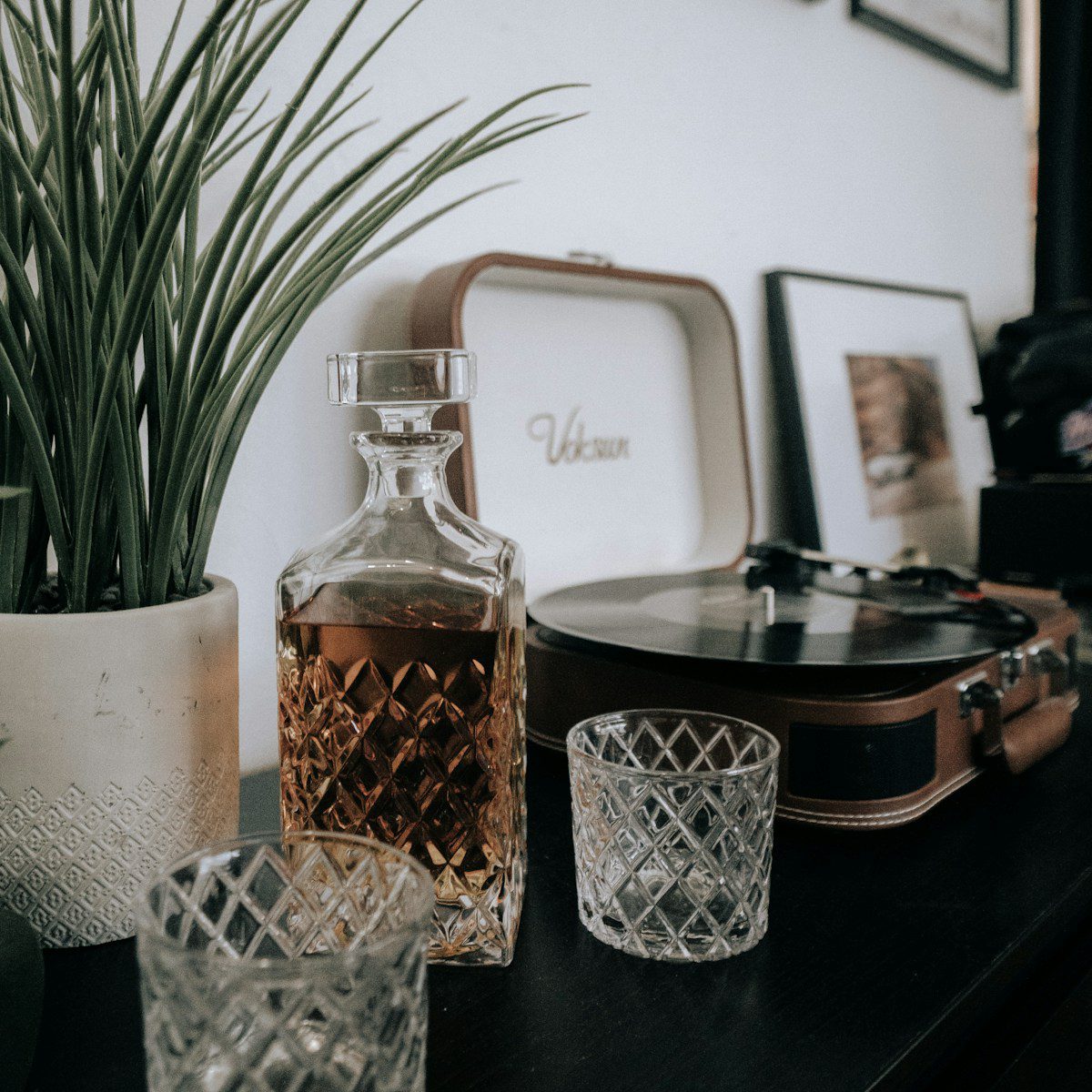
If you watch movies or TV shows like Mad Men or Suits, you have seen the “Power Move.”
The protagonist walks into an office, picks up a heavy crystal bottle with no label, and pours a drink. It looks sophisticated, elegant, and timeless.
But in the real world, the whisky decanter guide is more complicated than just aesthetics.
Does decanting whisky actually improve the flavor like it does for wine? Or does it ruin the spirit? And most importantly, is that antique crystal decanter you bought at a flea market actually poisoning you with lead?
In this guide, we are separating the Hollywood myths from the scientific reality. Here is everything you need to know before you pour your expensive Single Malt into a glass vessel.
Table of Contents
Click below to jump to a section:
1. Whisky vs. Wine: Does it Need to Breathe?
The most common question in any whisky decanter guide is about flavor.
With wine, decanting is functional. You pour wine into a wide vessel to expose it to oxygen. This oxidation softens the tannins and “opens up” the fruit flavors.
Whisky is different.
Whisky is a distilled spirit with a high alcohol content (40%+). It is chemically stable. It does not need to “breathe” in the same way wine does.
In fact, too much oxygen is bad for whisky. While a few minutes in the glass helps release aromas, leaving whisky in a decanter for months will cause it to oxidize. The vibrant fruit notes will flatten out, and the spirit will taste dusty or metallic.
The Verdict:
Decanting whisky provides zero flavor benefit. It is purely for aesthetics. You do it because it looks beautiful, not because it makes the drink taste better.
Want to preserve flavor?
Read our guide on How to Store Whisky properly to avoid oxidation.
2. The Safety Warning: Lead Crystal
This is the most critical part of our whisky decanter guide.
Antique crystal decanters (the ones you find in thrift stores or inherit from grandparents) often contain Lead.
Lead oxide was historically added to glass to make it sparkle and to make it easier to cut into intricate shapes.
The Problem: Leaching.
Alcohol is a solvent. If you put whisky into a lead crystal decanter, the lead leaches out of the glass and into the liquid.
Studies have shown that within 48 hours, the lead content in the whisky can rise to dangerous levels. If you drink from that decanter after a month, you are ingesting a toxic heavy metal.
How to stay safe:
1. Only buy modern “Lead-Free Crystal” decanters.
2. If you use an antique decanter, only use it for serving (pour it in, serve guests, pour it back out). Never store liquid in it long-term.
3. The Seal: Why Most Decanters Ruin Whisky
Another major issue with cheap decanters is the stopper.
Most decorative decanters have a “glass-on-glass” stopper. It sits loosely in the neck. It rattles when you move it.
This is a disaster for whisky.
Alcohol evaporates. This is known as the “Angels’ Share.” If your decanter does not have an airtight seal, the alcohol vapors will escape into the room.
Over the course of a few months, your 46% ABV whisky might drop to 35% ABV. It will lose its texture, its punch, and its flavor. It will taste like flavored water.
What to look for:
Always buy a decanter with a rubber or silicone seal on the stopper. It must be airtight.
4. When Should You Use a Decanter?
If it doesn’t help the flavor and it might hurt the liquid, why use one at all?
Because aesthetics matter.
1. Hosting and Presentation:
A crystal decanter looks stunning on a bar cart. It adds a sense of occasion when you pour a dram for a guest. It creates an atmosphere of luxury.
2. Blind Tastings:
A decanter hides the label. This is perfect for a “Blind Tasting” where you want your friends to judge the liquid, not the brand. It removes bias.
3. The “House Blend”:
Many enthusiasts use a decanter to create their own unique blend (see below).
Hosting a party? A decanter is a great centerpiece.
Check out our guide on hosting a whisky tasting here.
5. The Infinity Bottle Project
The most popular use for a decanter in 2026 is the Infinity Bottle.
This is a living blend of your own creation.
How it works:
Every time you finish a bottle of whisky, you pour the last 1oz (the dregs) into your Infinity Decanter. Over time, you mix Bourbons, Scotches, Ryes, and Single Malts together.
The flavor profile changes every time you add something new. It becomes a unique history of everything you have drunk over the year.
Pro Tip:
Keep two separate Infinity Bottles. One for “Smoky/Peated” whisky and one for “Sweet/Unpeated” whisky. If you mix heavy peat with sweet bourbon, the smoke will overpower everything.
6. Summary: Whisky Decanter Guide
Decanters are beautiful, but they are tools of style, not science.
If you want to use one, follow this whisky decanter guide checklist:
- Material: Ensure it is Lead-Free Crystal.
- Seal: Ensure it has a rubber stopper to be airtight.
- Usage: Use it for short-term serving or an Infinity Bottle.
Ultimately, the best vessel for your whisky is the glass in your hand.
Need the right glass?
Check out our guide to the Best Whisky Glasses here.
Become a Certified Expert
Take your knowledge from “hobbyist” to “connoisseur.” Join our Virtual Whiskey Tasting VIP program and get guided lessons, rare bottle alerts, and tasting notes sent straight to your inbox.