

The Whisky Barrel Bung Explained: Why Silicone is Replacing Wood (2026)
Sip & Learn: Volume 159
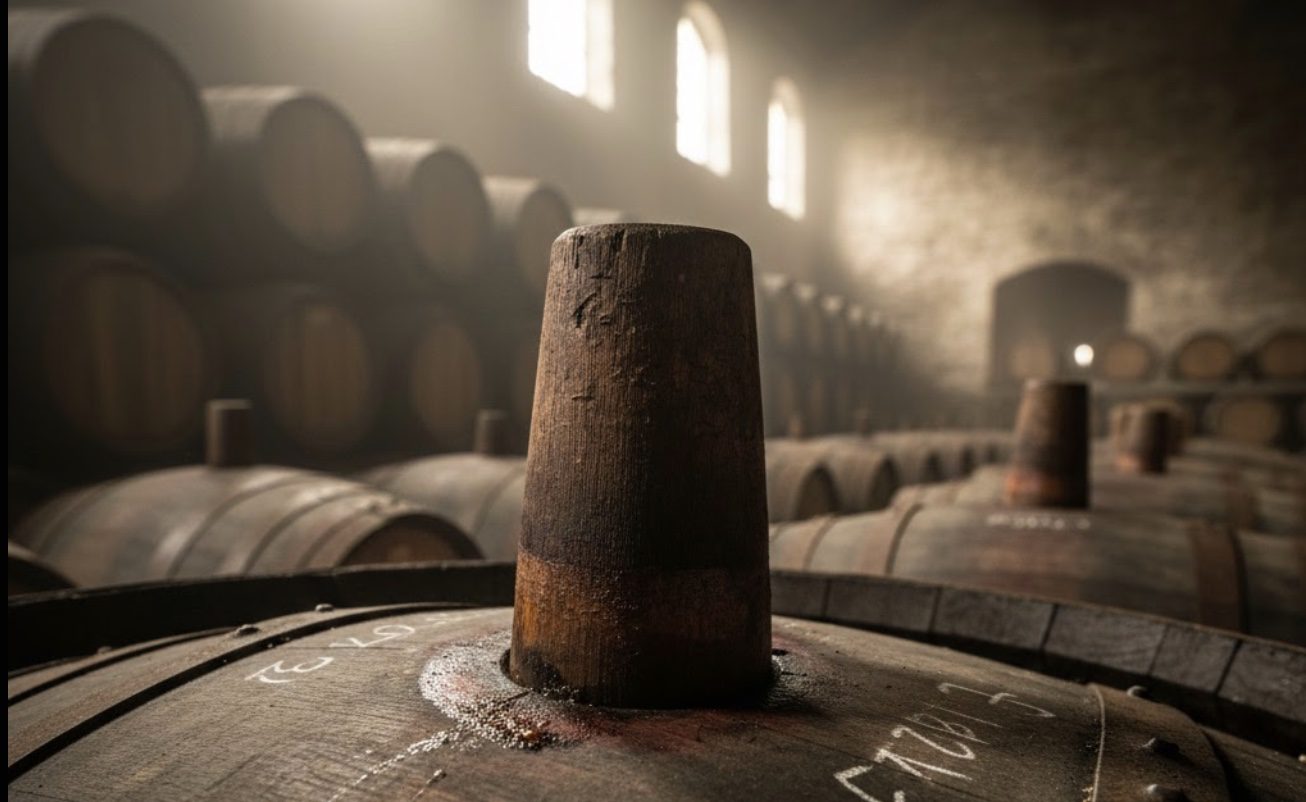
It is a small, unassuming piece of material, often no larger than the palm of your hand. Yet, without it, the entire contents of a cask—worth thousands of pounds—would evaporate or leak onto the warehouse floor.
We are talking about the **Whisky Barrel Bung**.
For centuries, compressed poplar wood was the industry standard. But walk into a modern warehouse today, and you are increasingly likely to see white silicone stoppers instead.
In this guide, we explore the vital role of the bung, the tradition of the “bung cloth,” and why the industry is modernising this ancient seal.
Table of Contents
Click below to jump to a section:
1. The Function of the Bung
The **Whisky Barrel Bung** serves two critical purposes. First, it must provide a liquid-tight seal to prevent the precious spirit from leaking out, especially when casks are rotated or moved.
Second, and perhaps more importantly, it must allow for gas exchange. As the temperature in the warehouse fluctuates, the spirit expands and contracts. The bung needs to be secure, but if the pressure builds up too high without release, the staves could warp.
The bung sits in the “bung hole,” which is usually drilled into the widest part of the bilge stave.
Curious about cask anatomy?
Learn about staves, hoops, and heads in Vol 33.
2. Traditional Wooden Bungs
Historically, bungs were made from compressed poplar wood. Poplar is used because it is soft and pliable. When hammered into the hole, it expands as it absorbs moisture from the spirit, creating an incredibly tight seal.
However, wood has natural imperfections. It can rot, it can be eaten by weevils, and it is inconsistent.
Removing a wooden bung is also destructive. A warehouseman typically has to drill into it or hit the stave hard with a hammer (known as “flogging the bung”) to pop it out.
How is whisky aged?
Read about the Angel’s Share and evaporation (Vol 15).
3. The Rise of Silicone
In recent years, the industry has shifted towards silicone bungs. While they lack the romance of traditional wood, they offer superior performance.
Why Switch to Silicone?
- Reusability:
Unlike wood, which is destroyed upon removal, silicone bungs can be pulled out and reused multiple times. - Consistency:
Silicone does not rot or warp. It provides a perfect seal every time, reducing the risk of “leakers.” - Cleanliness:
There is no risk of wood splinters falling into the whisky when opening the cask for sampling.
4. What is a Bung Cloth?
If you visit a traditional dunnage warehouse, you might still see wooden bungs wrapped in a piece of rough fabric. This is called a Bung Cloth.
Traditionally made from Hessian or burlap, the cloth is placed over the bung hole before the wooden bung is hammered in. The coarse fabric acts as a gasket, filling the microscopic gaps between the wood of the bung and the wood of the stave.
It ensures an airtight seal and adds friction to prevent the bung from popping out as pressure builds during hot summers.
Visiting a warehouse soon?
Check out our Top 5 Distillery Tours for 2026 (Vol 140).
Summary: Sealing the Deal
The **Whisky Barrel Bung** may seem insignificant, but it is the gatekeeper of flavour. Whether using traditional poplar and hessian cloth or modern silicone, the goal remains the same: to protect the liquid gold inside.
Next time you see a cask, check the bung. If it is white silicone, you are looking at modern efficiency. If it is wood, you are looking at history.
Become a Certified Expert
Take your knowledge from “hobbyist” to “connoisseur.” Join our Virtual Whiskey Tasting VIP program and get guided lessons, rare bottle alerts, and tasting notes sent straight to your inbox.