

The 5 Whisky Regions of Scotland: A Flavor Map (2026)
Sip & Learn: Volume 35
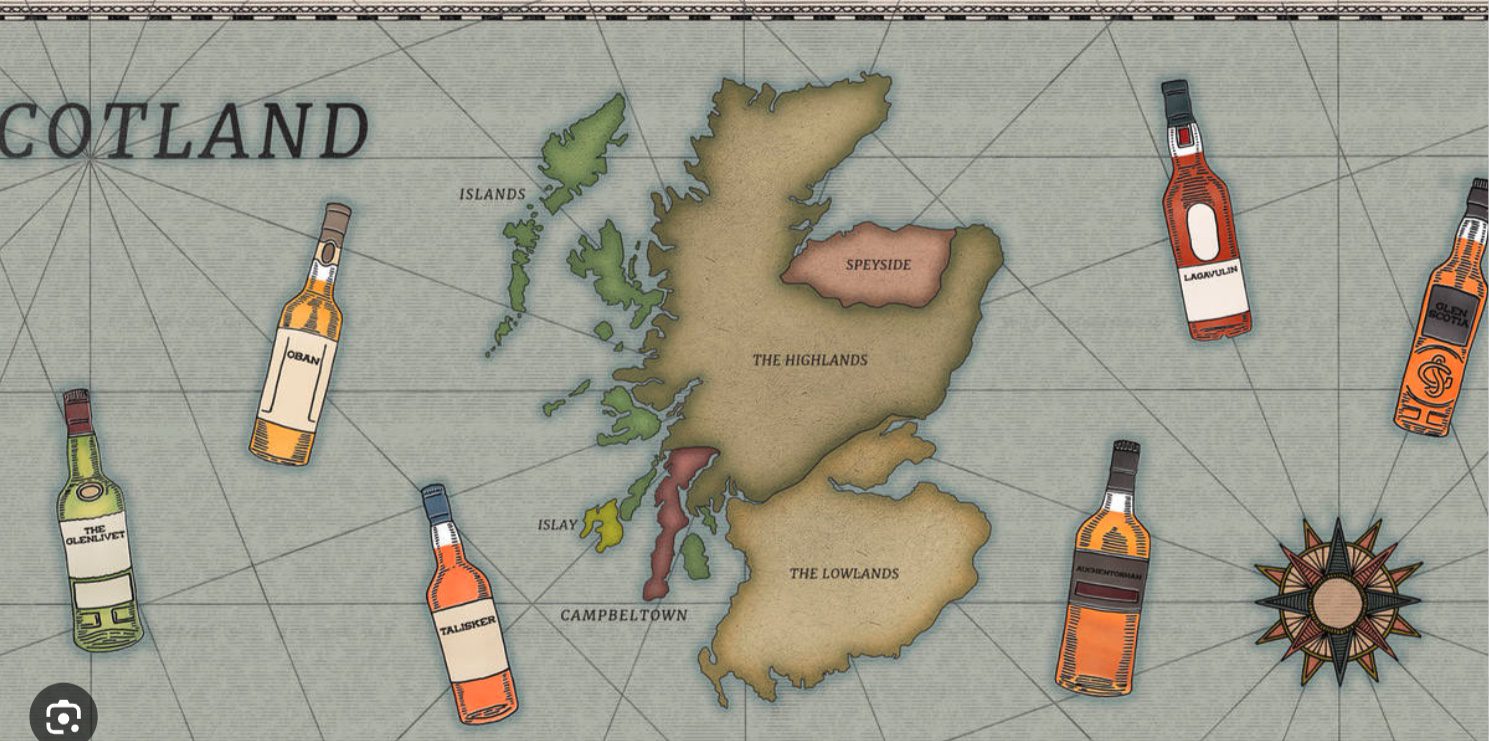
In France, wine is defined by “Terroir”—the idea that the land, soil, and climate affect the flavor of the grape.
The exact same concept applies to the Scotland whisky regions.
A Single Malt made on the storm-lashed coast of Islay will taste completely different from a Single Malt made in the rolling green hills of Speyside, even if they use the exact same ingredients.
For a beginner, the map of Scotland is the best menu you will ever read. Once you understand the geography, you can predict what a bottle will taste like before you even open it.
The Scotch Whisky Regulations legally recognize five distinct regions. In this guide, we are taking a tour of the Scotland whisky regions to help you find your perfect dram.
Table of Contents
Click below to jump to a region:
1. Speyside: The Sweet Heart
Famous Brands: Macallan, Glenfiddich, The Balvenie, Glenlivet.
Speyside is the most densely populated whisky region in the world. Located in the northeast of Scotland around the River Spey, it is home to over half of all Scottish distilleries.
If you are new to the Scotland whisky regions, start here.
Speyside whiskies are famous for being elegant, complex, and refined. They generally have little to no peat smoke. Instead, they focus on the flavor of the malt and the sherry cask.
Flavor Profile:
Apple, pear, honey, vanilla, nutmeg, and dried fruits (raisins/sultanas). They are often described as “Fruity” or “Dessert-like.”
Love sweet whisky?
Check out our review of the Best Speyside Whiskies for Beginners here.
2. The Highlands: Diversity & Depth
Famous Brands: Glenmorangie, Dalmore, Oban, Old Pulteney.
The Highlands is the largest of the Scotland whisky regions geographically. It covers everything from the north of Glasgow up to the tip of John O’Groats.
Because the area is so massive, the styles vary wildly.
- Northern Highlands: Often rich, full-bodied, and cereal-sweet (e.g., Dalmore).
- Southern Highlands: Often lighter, fruity, and drier (e.g., Aberfeldy).
- Western Highlands: Can have a touch of maritime salt and peat (e.g., Oban).
The Islands Sub-Region:
Legally, the islands (like Skye, Orkney, and Jura) are part of the Highlands. However, flavor-wise, they are distinct. Island whiskies (like Talisker or Highland Park) often combine the sweetness of the mainland with a coastal, salty, smoky kick.
3. Islay: The Island of Smoke
Famous Brands: Laphroaig, Lagavulin, Ardbeg, Bowmore.
Islay (pronounced Eye-Lah) is a small island on the west coast. It is the spiritual home of Peat.
This is the most polarizing of the Scotland whisky regions. You either love it or you hate it.
The peat on Islay is soaked in ocean water and decaying seaweed. When distilleries burn this peat to dry their barley, it infuses the grain with a heavy, medicinal smoke.
Flavor Profile:
Campfire smoke, iodine, seaweed, brine, smoked bacon, and tar. It is intense, savory, and unforgettable.
Why does it taste like smoke? The science is fascinating.
Read our Ultimate Guide to Peated Whisky here.
4. The Lowlands: The Gentle Spirit
Famous Brands: Auchentoshan, Glenkinchie, Bladnoch.
The Lowlands region covers the southern part of Scotland (Glasgow and Edinburgh).
Historically, this region is known for a unique production method: Triple Distillation.
While most Scotch is distilled twice, Lowland distillers (most notably Auchentoshan) often distill three times. This strips away all the heavy oils and impurities.
The result is the lightest, most delicate spirit in Scotland. It is often called the “Breakfast Whisky” or the “Aperitif Whisky.”
Flavor Profile: Grass, honeysuckle, cream, ginger, and toast. It is incredibly smooth and easy to drink.
5. Campbeltown: The Forgotten Giant
Famous Brands: Springbank, Glen Scotia, Glengyle (Kilkerran).
Campbeltown is the smallest of the Scotland whisky regions, located at the end of the Kintyre peninsula.
In the Victorian era, Campbeltown was the “Whisky Capital of the World,” boasting over 30 distilleries. Today, only three remain. However, they produce some of the most sought-after whisky on the planet.
Campbeltown whisky is a cult favorite among experts because it is distinctively “funky.”
Flavor Profile: It combines the brine and salt of the coast with a unique oily, industrial texture. It often tastes of wet wool, diesel, salt, and fruit. It sounds strange, but it is delicious.
Summary: Exploring The 5 Whisky Regions of Scotland
Understanding the Scotland whisky regions gives you a roadmap to flavor.
If you want sweet fruit, go to Speyside. If you want fire and smoke, go to Islay. If you want light elegance, go to the Lowlands.
The best way to learn is to host a tasting. Buy one bottle from each region and taste them side-by-side to see the geography comes to life in your glass.
Ready to host a Regional Tasting?
Use our guide on How to Host a Whisky Tasting to set it up perfectly.
Become a Certified Expert
Take your knowledge from “hobbyist” to “connoisseur.” Join our Virtual Whiskey Tasting VIP program and get guided lessons, rare bottle alerts, and tasting notes sent straight to your inbox.