

Single Malt vs Blended Whisky: What is the Real Difference? (2026)
Sip & Learn: Volume 25
In the world of spirits, there is a pervasive myth. It suggests that Single Malt vs Blended Whisky is a battle between “Quality” and “Cheap.”
If you listen to the snobs, they will tell you that Single Malt is the only thing worth drinking. They might say that Blended Whisky is just “filler” meant for mixing with soda.
In 2026, this is completely false.
Some of the most expensive and complex whiskies in the world are blends. Conversely, there are plenty of cheap Single Malts that taste like harsh acetone.
To truly understand what you are buying, you need to look past the marketing and look at the science.
In this guide, we are breaking down the chemical and legal differences of Single Malt vs Blended Whisky so you never overpay for a label again.
Table of Contents
Click below to jump to a section:
1. The Definition: What does “Single” Mean?
The biggest confusion in the Single Malt vs Blended Whisky debate comes from the word “Single.”
Many people assume “Single Malt” means the whisky comes from a single barrel or a single batch. This is incorrect.
“Single” refers to the Distillery.
It means every drop of liquid in that bottle came from one single building (e.g., The Macallan Distillery). It does not mean it is one barrel. In fact, a bottle of Single Malt is usually a mix of hundreds of barrels from that one distillery, blended together to create a consistent flavor.
“Blended” refers to a mixture of Distilleries.
It means the liquid is a mix of whisky from Distillery A (e.g., Caol Ila) and Distillery B (e.g., Cameronbridge).
2. Single Malt: The “Character” Spirit
To legally be called a “Single Malt Scotch Whisky,” it must follow three strict rules:
- It must be made from 100% Malted Barley (no corn or wheat).
- It must be distilled in Copper Pot Stills.
- It must be made at one single distillery.
Why drink Single Malt?
Single Malt is about Character. Because it comes from one place, it reflects the specific water, micro-climate, and style of that location. It is idiosyncratic. It might be incredibly smoky, or very floral. It has “spikes” of flavor.
Want to try a great one?
Check out our list of the 5 Best Single Malts for Beginners here.
3. Blended Whisky: The “Harmony” Spirit
Blended Whisky is a mix of two things:
- Single Malt Whisky (for flavor).
- Grain Whisky (for smoothness and volume).
Grain whisky is made from lighter grains like Corn or Wheat. It is distilled to a very high alcohol percentage, which strips out most of the heavy flavors.
When a Master Blender creates a product like Johnnie Walker Black Label, they are taking punchy, aggressive Single Malts and smoothing them out with creamy Grain Whisky.
Why drink Blended Whisky?
Blended Whisky is about Consistency and Harmony. It is engineered to be smoother than Single Malt. It rounds off the sharp edges. It is often better for cocktails because it binds flavors together rather than dominating them.
4. Pot Still vs. Column Still (The Science)
The real difference in the Single Malt vs Blended Whisky war isn’t just the ingredients. It is the physics of the still.
Single Malt: The Pot Still
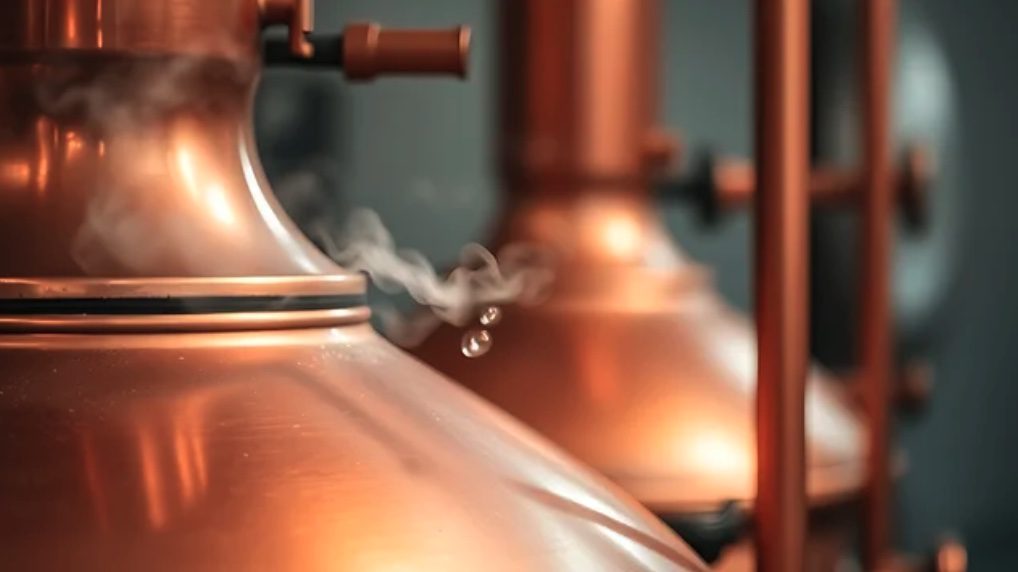
Single Malt must be made in a Copper Pot Still. This looks like a giant onion or swan.
It is an inefficient way to make alcohol. It has to be done in batches. However, because it is inefficient, it leaves behind a lot of heavy oils and congeners (flavor compounds). This creates a rich, thick, flavorful spirit.
Grain Whisky: The Column Still
Grain Whisky (used in blends) is usually made in a Column Still (Coffey Still). This looks like a tall industrial tower.
It runs continuously, 24/7. It is incredibly efficient. It strips the alcohol to a high proof (often 94% ABV) before watering it down. This creates a spirit that is very light, clean, and vodka-like in its purity before it hits the barrel.
5. Blended Malt: The Third Category
Just to make things confusing, there is a third category: Blended Malt (formerly called Vatted Malt).
This is a mix of Single Malts from different distilleries, with zero grain whisky added.
Examples include Monkey Shoulder or Johnnie Walker Green Label.
This is often the “Sweet Spot” for value. You get the rich flavor complexity of 100% malted barley, but the balance of a blend. Many experts believe Blended Malts offer the best value for money in the entire industry in 2026.
Summary: Single Malt vs Blended Whisky
So, who wins the fight?
Buy Single Malt If: You want to explore unique, specific flavors. You want to taste the “terroir” of Islay peat or Speyside fruit. You enjoy sipping neat and analyzing a dram.
Buy Blended Whisky If: You want a smooth, easy-drinking experience. You are making Highballs or cocktails. You want a consistent flavor profile that doesn’t challenge your palate too aggressively.
The truth is, a high-end Blend (like Hibiki or JW Blue) is often far superior to a cheap, young Single Malt. Don’t judge the bottle by the category; judge it by the taste.
Ready to test your palate? Now that you know the difference, host a blind tasting to see if you can tell them apart.
Read our guide on hosting a whisky tasting at home.
Become a Certified Expert
Take your knowledge from “hobbyist” to “connoisseur.” Join our Virtual Whiskey Tasting VIP program and get guided lessons, rare bottle alerts, and tasting notes sent straight to your inbox.