

Laphroaig Virtual Distillery Tour: Inside the Iodine Giant (2026)
Sip & Learn: Volume 84
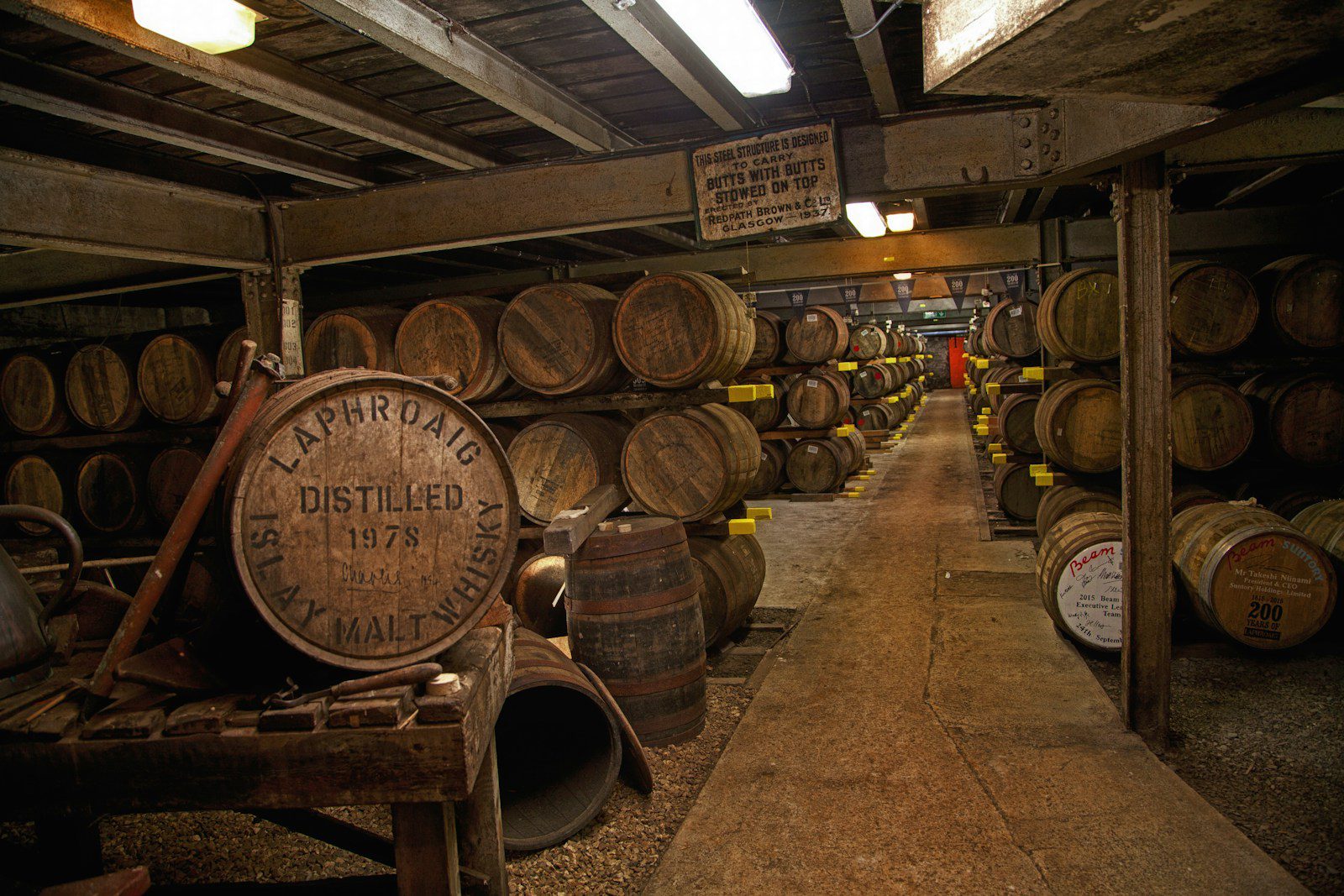
There is no middle ground with Laphroaig. You either love it, or you think it tastes like a burning hospital.
This distillery, located on the southern coast of Islay, produces the most divisively flavored whisky in the world. It is famous for notes of iodine, seaweed, antiseptic, and tar.
But how do they create that flavor?
The answer lies inside the white-washed walls of the distillery. Laphroaig is one of the few remaining producers in Scotland that still malts its own barley by hand on a stone floor.
In this Laphroaig Virtual Distillery Tour, we are going to take you inside the peat kilns, stand next to the stills, and walk through the legendary Warehouse 1 to understand the alchemy of Islay.
Watch the Virtual Experience
Table of Contents
Click below to jump to a section:
1. The Location: The Hollow by the Broad Bay
Laphroaig (pronounced La-Froyg) is Gaelic for “The beautiful hollow by the broad bay.”
The distillery sits right on the water’s edge. At high tide, the waves of the Atlantic Ocean crash against the walls of the warehouse.
This location is not accidental. The salty sea air permeates everything. It gets into the soil, the water source (the Kilbride Dam), and the casks. This “maritime” influence is the backbone of the spirit.
Why does geography matter?
See where Islay fits on the map of Scotch Whisky Regions.
2. The Floor Maltings: A Dying Art
This is the highlight of any Laphroaig Virtual Distillery Tour.
Most distilleries buy their malt from industrial factories. Laphroaig still produces about 20% of its malt in-house, by hand.
The Process:
They soak the barley in water and spread it out on a massive stone floor. For seven days, the “Maltmen” must turn the grain by hand using heavy wooden shovels (shiels) to stop the roots from tangling.
This labor-intensive process allows them to control the exact timing of germination, creating a specific texture that industrial machines cannot replicate.
Why do they do it?
Floor malting is inefficient and expensive. They do it because it is the only way to get the “phenols” (smoke particles) to stick to the grain in exactly the right way.
Why is this rare?
Read our guide on Floor Malting and why it costs more.
3. The Peat Kilns: Cold Smoking
Once the barley has sprouted, it goes into the kiln to be smoked.
Laphroaig uses peat cut by hand from their own “Glenmachrie” bog. This peat is full of decomposed heather, lichen, and moss.
The Secret Technique: Cold Smoking.
Most distilleries dry their grain with hot air and smoke simultaneously. Laphroaig does something different. They burn the peat at a very low temperature for roughly 12-15 hours before they turn on the heat to dry the grain.
This “Cold Smoke” allows the damp barley to absorb a massive amount of “Tar” and “Creosote” flavors without being cooked. This is the source of that famous medicinal smell.
What is Peat?
Read our deep dive on Islay Peat History here.
4. The Stills: Creating the Medicine
Laphroaig has 7 copper pot stills (3 wash stills and 4 spirit stills).
They are small and onion-shaped.
The Upward Angle:
The “Lyne Arms” (the pipes at the top) angle upwards. This creates “Reflux.” The heavy, oily vapors hit the copper, turn back into liquid, and fall back into the pot to be distilled again.
This reflux strips out some of the heaviness, but the late “cut” (collection point) ensures that the tar and iodine notes remain. It is a delicate balancing act between fruitiness and chemical smoke.
How do stills work?
Understand the physics of Reflux in our Copper Stills guide.
5. Friends of Laphroaig (Your Square Foot)
One of the most brilliant marketing moves in whisky history is the “Friends of Laphroaig” program.
If you buy a bottle of Laphroaig, it comes with a code. If you enter that code on their website, you become a “Friend” and you are granted a lifetime lease on one square foot of land on Islay.
The Rent:
Every year, you can visit the distillery, put on wellies, walk out to your specific plot of land (marked by a flag), and then go to the visitor center to collect your “Rent”—a free dram of Laphroaig.
It is a community that connects drinkers from all over the world to this tiny, wet island.
6. Summary: The King of Islay
The Laphroaig Virtual Distillery Tour reveals the truth about this spirit: it is made by hand, by people, in one of the harshest climates in Scotland.
It is not designed to be a crowd-pleaser. It is designed to be authentic.
Whether you love the taste of iodine or hate it, you have to respect the process that creates it.
Become a Certified Expert
Take your knowledge from “hobbyist” to “connoisseur.” Join our Virtual Whiskey Tasting VIP program and get guided lessons, rare bottle alerts, and tasting notes sent straight to your inbox.