
Islay Distilleries Map: The 9 Titans of Smoke (Ultimate Guide)
Sip & Learn: Volume 150
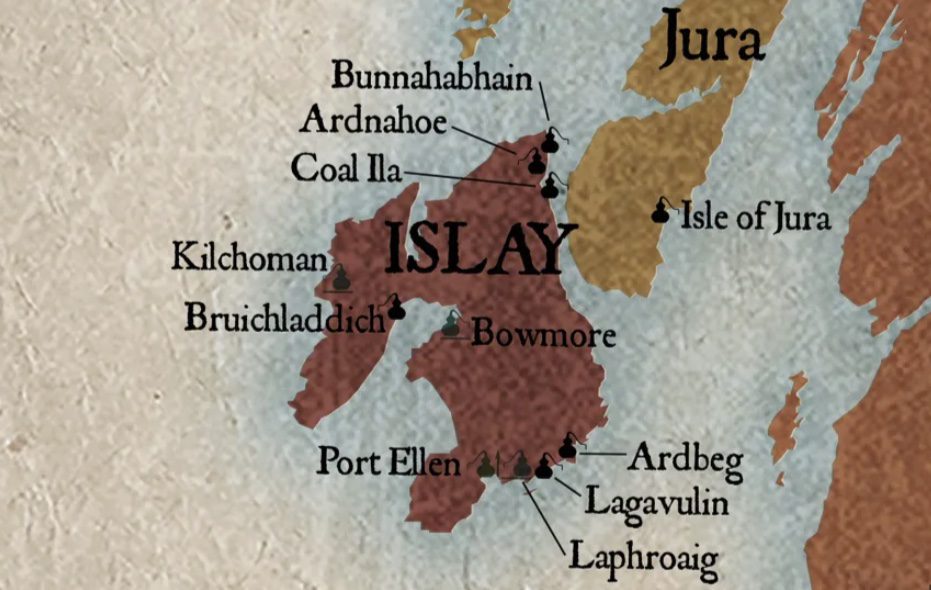
Islay is known as the “Queen of the Hebrides.” It is a small, windswept island off the west coast of Scotland, home to only 3,000 people.
Yet, despite its size, it is the most famous whisky region on the planet.
For the peat lover, Islay is Mecca. The island is essentially a floating lump of peat moss, battered by salt spray and rain. This unique terroir creates a style of whisky that is pungent, medicinal, smoky, and absolutely unmistakable.
However, not all Islay whiskies taste the same. Geography matters. The heavy monsters of the south coast taste very different from the floral spirits of the north.
In this guide, we are going to draw a mental Islay Distilleries Map, categorizing the 9 active producers and helping you navigate the smoky waters of the Hebrides.
Table of Contents
Click below to jump to a region:
1. The Kildalton Coast (The Southern Giants)
If you look at the bottom right of your Islay Distilleries Map, you will find a road stretching east from the village of Port Ellen. This is the Kildalton Coast.
This three-mile stretch of road is home to the “Big Three” of peat: Laphroaig, Lagavulin, and Ardbeg.
These distilleries sit right on the ocean. Their warehouses are lashed by sea spray during winter storms. They share the same water sources and the same peat bogs, yet they produce distinctly different spirits. This is where the heaviest, most medicinal whiskies in the world are born.
2. Laphroaig vs. Lagavulin vs. Ardbeg
These three neighbors are often confused by beginners. Here is how to tell them apart on the palate.
Laphroaig (The Medicinal One)
Profile: Iodine, bandages, seaweed, antiseptic, wet earth.
Laphroaig is famous for its “love it or hate it” profile. It smells like a hospital. This comes from their unique peat kilns and the high moss content in their peat bogs.
Lagavulin (The Aristocrat)
Profile: Bonfire smoke, Lapsang Souchong tea, rich sherry, dry oak.
Lagavulin is slower, richer, and more elegant. It is typically aged in sherry casks (like the 16 Year Old), which wraps the smoke in a blanket of dried fruit sweetness.
Ardbeg (The Paradox)
Profile: Tar, rope, lime zest, espresso, vanilla.
Ardbeg is often the peatiest (highest PPM), but it uses a “purifier” on the still which refluxes the spirit. This creates a strange but delicious combination of heavy tar and bright, zesty citrus fruit.
What is PPM?
Understand smoke levels in our Peat Guide (Vol 143).
3. The Central & North (Lighter Smoke)
Moving north on the Islay Distilleries Map, the style changes. The peat influence becomes less medicinal and more atmospheric.
Bowmore (The Capital):
Located in the main village, Bowmore is the oldest distillery on Islay (1779). It is famous for a “medium” peat style (around 25 PPM) combined with tropical fruit notes.
Caol Ila (The Giant):
Hidden away near the ferry terminal, Caol Ila produces the most whisky on the island (mostly for Johnnie Walker). Its style is clean, grassy, and oily with a distinct note of olive brine.
Bunnahabhain (The Unpeated):
The rebel of the north. Historically, Bunnahabhain makes unpeated whisky. It is rich, nutty, and sherried—proving that Islay whisky doesn’t always have to taste like smoke.
4. The Farm Distilleries (The New School)
In recent years, new distilleries have popped up, focusing on “Terroir”—the idea that the specific barley variety and field location matter.
- Bruichladdich: Known for their aqua-blue bottles. They produce unpeated (The Classic Laddie), heavily peated (Port Charlotte), and the world’s most peated whisky (Octomore).
- Kilchoman: A true farm distillery. They grow their own barley on-site. Their whisky is young, ash-heavy, and vibrant.
- Ardnahoe: The newest addition (founded 2018) by the Hunter Laing family. It sits near Caol Ila and Bunnahabhain, producing a heavy, traditional style.
5. Why is Islay Peat Different?
Peat from the Highlands is composed of decomposed trees and heather. It creates a dry, woody smoke.
Peat from Islay is composed of decomposed moss, seaweed, and salt-saturated vegetation. There are no trees on Islay.
When this marine peat is burned, it releases chemicals called cresols and guaiacols. These are the compounds responsible for the medicinal, antiseptic, and iodine flavors that define the region.
Pro Tip:
If you visit Islay, fly into Glenegedale airport, but take the ferry back. The view of the three Kildalton distilleries from the deck of the ferry as you leave Port Ellen is one of the greatest sights in the whisky world.
Visiting the island?
Check out our World Whisky Destinations guide (Vol 109).
Summary: Choose Your Coast
Navigating the Islay Distilleries Map is an adventure in flavor.
If you want a punch in the face, head South to Laphroaig. If you want a gentle embrace, head North to Bunnahabhain. If you want luxury, pour a Lagavulin.
There is no wrong choice on Islay, as long as you appreciate the craft of the Smoke.
Become a Certified Expert
Take your knowledge from “hobbyist” to “connoisseur.” Join our Virtual Whiskey Tasting VIP program and get guided lessons, rare bottle alerts, and tasting notes sent straight to your inbox.