

Canadian Whisky vs Bourbon: Is Rye the Only Difference? (2026)
Sip & Learn: Volume 62
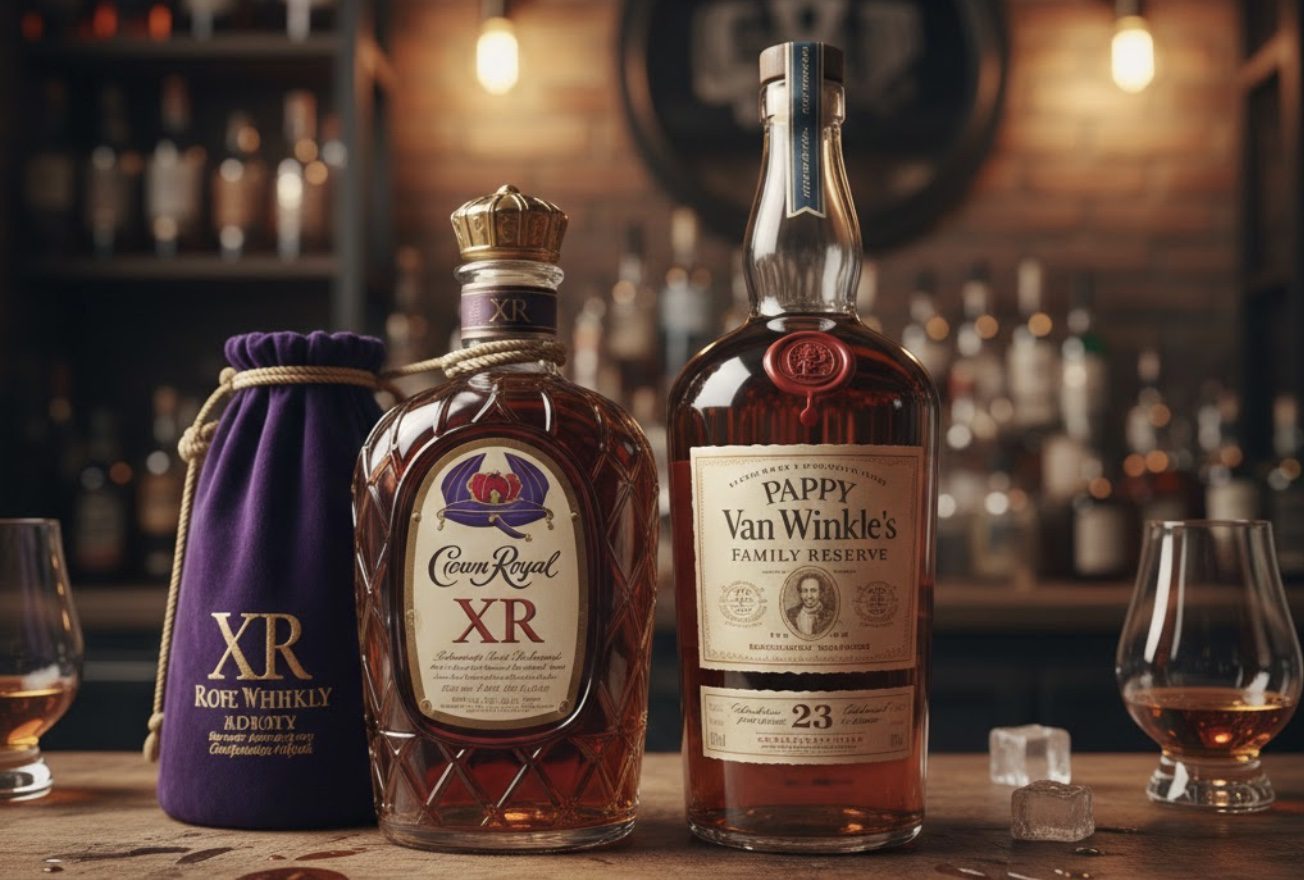
The debate of Canadian Whisky vs Bourbon is a tale of two neighbors with very different rules.
To the casual drinker, they might seem interchangeable. They are both brown spirits made in North America. They are both often mixed with ginger ale or Coke.
However, to the connoisseur, they are worlds apart.
Bourbon is the strict, rule-following traditionalist. It must be corn, it must be new oak, and it cannot have additives.
Canadian Whisky is the wild experimenter. It is often lighter, smoother, and—surprisingly—allowed to contain fruit juice, sherry, or even wine.
In this guide, we are going to break down the legal, chemical, and flavor differences of Canadian Whisky vs Bourbon so you know exactly what is in your glass.
Table of Contents
Click below to jump to a section:
1. The Legal Definitions: Strict vs. Flexible
To understand Canadian Whisky vs Bourbon, you have to look at the law.
Bourbon (The Strict Rules)
As we have discussed in previous guides, Bourbon law is ironclad.
- Must be made in the USA.
- Must be at least 51% Corn.
- Must be aged in New Charred Oak barrels.
- No additives allowed (except water).
Canadian Whisky (The Flexible Rules)
Canadian law is much more relaxed. For a spirit to be “Canadian Whisky,” it must:
- Be made in Canada.
- Be made from a fermented mash of cereal grain (any grain).
- Be aged in small wood for at least 3 years.
- Possess the aroma, taste, and character generally attributed to Canadian whisky.
That last point is key. It basically says “it has to taste like whisky.” This gives Canadian distillers massive freedom to experiment with barrel types and blending techniques that are illegal in Kentucky.
Want to master Bourbon?
Check out our guide to the 5 Best Bourbons for Beginners here.
2. The “Rye” Confusion: Why Canada Calls it Rye
This is the most confusing part for Americans.
In the USA, “Rye Whiskey” must be made from 51% Rye grain. It is spicy and bold.
In Canada, the terms “Canadian Whisky” and “Rye Whisky” are legally interchangeable. You can buy a bottle of Canadian “Rye” that is made from 99% Corn and only 1% Rye.
Why? History.
Historically, Canadian whisky was mostly wheat. When German immigrants arrived, they suggested adding a small amount of rye grain to the mash for flavor. This “rye-flavored” whisky became so popular that people just started asking for “Rye.” The name stuck, even as distilleries switched to cheaper corn.
So, if you buy Canadian Club or Crown Royal, you are drinking a “Rye” that is actually mostly Corn.
Want real American Rye?
Check out our list of the Best Spicy Ryes here.
3. Production: Mash Bill vs. Blending
The production method is the biggest technical difference in Canadian Whisky vs Bourbon.
The American Way (Mash Bill)
Bourbon distillers mix all their grains (Corn, Rye, Barley) together before fermentation. They cook them into a soup (“Mash”) and distill them together. The flavors are married from birth.
The Canadian Way (Blending)
Canadian distillers ferment, distill, and age their grains separately.
- They make a barrel of 100% Corn whisky (The “Base”).
- They make a barrel of 100% Rye whisky (The “Flavoring”).
They only blend these liquids together after they have been aged.
Why this matters: It gives the Master Blender total control. If they want a spicier batch, they just dump in more of the Rye barrels. If they want a smoother batch, they use more Corn barrels. It creates a spirit that is incredibly consistent and generally lighter than Bourbon.
4. The 9.09% Rule (The Secret Additive)
This is the secret weapon of Canadian Whisky, and the reason many purists look down on it.
Under Canadian law, a distiller is allowed to add up to 9.09% of non-whisky ingredients to the final blend, as long as that ingredient has been aged for 2 years.
This means a bottle of Canadian Whisky can legally contain:
- Sherry
- Fruit Juice
- Bourbon
- Rum
- Wine
This rule was originally created to help Canadian distillers save tax money when exporting to the USA, but today it is used for flavor.
Example: Alberta Premium Dark Horse uses this rule to add 8% Sherry and 1% Bourbon to their Rye whisky. This makes it incredibly rich and fruity compared to a standard American Rye.
5. Flavor Profile: Smoothness vs. Sweetness
So, what does this mean for your palate?
Bourbon Tastes Like:
Heavy, sweet, and woody. Because it uses New Oak, it is packed with vanilla, caramel, and coconut. It feels thick on the tongue.
Canadian Whisky Tastes Like:
Light, crisp, and spicy. Because it uses mostly Used Oak (old bourbon barrels), it has less vanilla punch. It highlights the grain. It is “smoother” and has less alcohol burn, making it ideal for highballs and mixing.
Mixing a Manhattan?
We recommend using a bold Rye or High-Proof Bourbon. Get the recipe here.
6. Summary: Which Should You Buy?
The battle of Canadian Whisky vs Bourbon is a battle of style.
Buy Bourbon If:
– You want a rich, dessert-like sipping experience.
– You love vanilla and caramel.
– You want a spirit that follows strict purity laws.
Buy Canadian Whisky If:
– You want the smoothest possible drink.
– You are making light cocktails (like a Highball with Ginger Ale).
– You want to explore high-end “100% Rye” bottles like Lot 40, which showcase the true potential of Canadian distillation.
Become a Certified Expert
Take your knowledge from “hobbyist” to “connoisseur.” Join our Virtual Whiskey Tasting VIP program and get guided lessons, rare bottle alerts, and tasting notes sent straight to your inbox.