

Sip & Learn: Volume 16
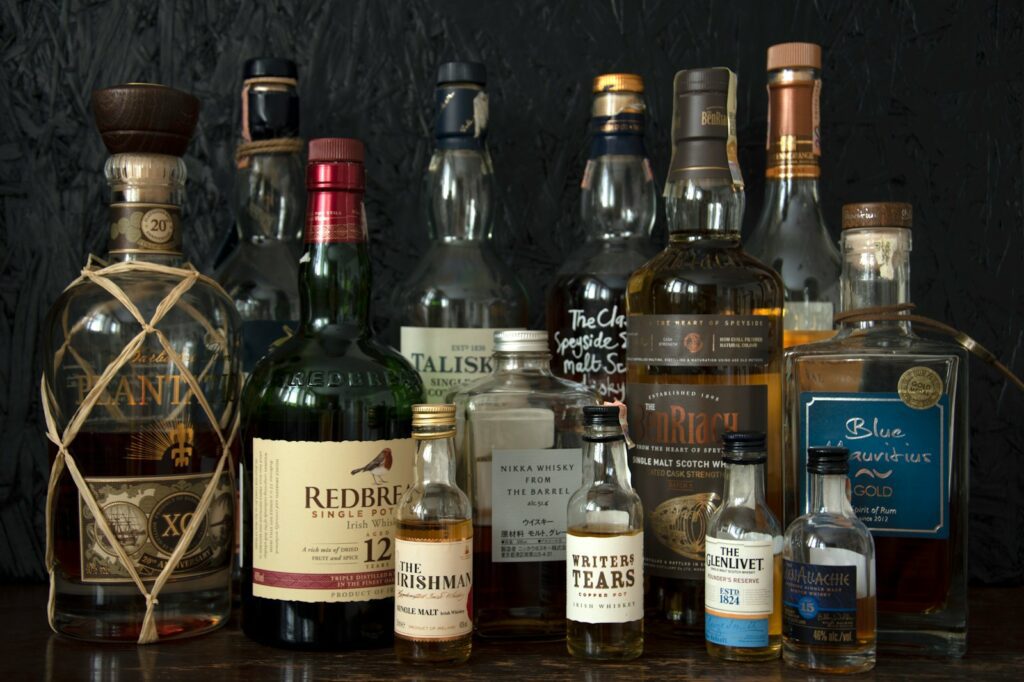
The battle of whisky vs whiskey is the most common question in the spirits world. You look at a bottle of Scotch, and the label clearly reads “Whisky.” You pick up a bottle of Jameson or a Kentucky Bourbon, and it says “Whiskey.”
Is it a typo? Is it a difference in ingredients? Or is it just a regional preference? The short answer is: it depends on geography. But the full story of whisky vs whiskey involves a 150-year-old marketing war.
In this comprehensive guide, we will break down the spelling debate, explore the surprising history, and help you navigate the shelf like a pro.
Table of Contents
Click below to jump to a section:
1. Whisky vs Whiskey: The Geography Rule
If you take nothing else away from this article, remember this simple rule. The difference in spelling almost always comes down to the country of origin.
A clever linguistic trick to remember the whisky vs whiskey difference is to look at the name of the country itself:
- Has an “E”? If the country name has an E in it (United States, Ireland), they usually spell it WhiskEy.
- No “E”? If the country name does not have an E (Scotland, Japan, Canada), they usually spell it Whisky.
This rule works 95% of the time. Both words come from the Gaelic term Uisge Beatha, meaning “Water of Life.” But understanding the whisky vs whiskey distinction is key to buying the right bottle.
2. The History of Whisky vs Whiskey
Up until the late 19th century, “Whisky” (without the e) was the standard spelling everywhere. So, why did Ireland and America change it?
It was essentially a marketing tactic. In the 1800s, Irish Whiskey was the gold standard. To protect their brand, the big Irish distillers in Dublin decided to add an “e” to their bottles to distinguish their premium product from the spirit coming out of Scotland.
Since America was flooded with Irish immigrants who brought their distilling traditions with them, the United States adopted the Irish spelling. This solidified the whisky vs whiskey split we see today. Meanwhile, Scotland, Canada, and later Japan, stuck to the original spelling.
Explore American & Irish Styles
From the vanilla notes of Kentucky Bourbon to the smooth finish of Irish Pot Still, taste the history of the “E”.
3. Deep Dive: Where they use the “E”
Irish Whiskey
Ireland is the birthplace of the “Whiskey” spelling. Most Irish whiskey is Triple Distilled (distilled three times), whereas Scotch is usually distilled twice. This extra step removes heavier oils, resulting in a lighter, friendlier spirit.
American Whiskey
The United States is the land of diversity. While the spelling remains “Whiskey,” the styles vary wildly, from Bourbon to Tennessee Sour Mash.
4. Deep Dive: Where they drop the “E”
Scotch Whisky
The Scots are incredibly protective of their spelling. In fact, according to the Scotch Whisky Association (a major authority on the subject), the legal definition of “Scotch Whisky” strictly omits the ‘e’.
Scotch is generally malted barley-based and often reflects the rugged terrain of Scotland. From the floral notes of Speyside to the smoky peat bombs of Islay, Scotch offers the widest range of flavor profiles in the world.
Japanese Whisky
Why does Japan use the Scottish spelling? Because the father of Japanese whisky, Masataka Taketsuru, traveled to Scotland in 1918 to learn the trade. He returned to Japan with a Scottish wife and Scottish production methods. To pay homage to his teachers, Japan has always used the spelling “Whisky.”
5. The Exceptions (Maker’s Mark)
Every rule has an exception in the whisky vs whiskey debate. If you walk down the bourbon aisle, you might notice that Maker’s Mark, George Dickel, and Old Forester all spell it “Whisky” on their labels, despite being American.
Why? Heritage.
The Samuels family (creators of Maker’s Mark) were of Scottish descent. When they created their bourbon, they wanted to honor their ancestry, so they opted for the Scottish spelling. It is still 100% Bourbon, and it tastes like American Whiskey, but the label tells a family story.
Does the glass matter more than the spelling?
Absolutely. Whether you spell it with an “e” or without, you shouldn’t drink premium spirit from a plastic cup. To unlock the aromas of a Single Malt or a refined Bourbon, you need the proper vessel.
We have compiled a guide to the best glassware to elevate your tasting experience:
Read our Ultimate Guide to Whisky Tasting Glasses here.
Become a Certified Expert
Take your knowledge from “hobbyist” to “connoisseur.” Join our Virtual Whiskey Tasting VIP program and get guided lessons, rare bottle alerts, and tasting notes sent straight to your inbox.