

Tannins: Why Old Whisky Tastes ‘Dry’ (The Science of Oak)
Sip & Learn: Volume 117
Have you ever taken a sip of a very old Scotch, or perhaps a heavy red wine, and immediately felt your mouth turn into sandpaper?
That physical sensation—where your saliva seems to vanish, and your gums feel tight—is called astringency. In the world of spirits, it is caused by one specific chemical compound: Whisky Tannins.
Tannins are often misunderstood. Beginners confuse them with bitterness (flavor), but they are actually about texture (mouthfeel).
Without tannins, whisky would feel flat, watery, and boring. But with too many tannins, whisky becomes woody, bitter, and undrinkable.
In this guide, we are going to explore the science behind the “dryness,” why European Oak packs a bigger punch than American Oak, and how to spot a bottle that has spent too much time in the wood.
Table of Contents
Click below to jump to a section:
1. What are Whisky Tannins?
Scientifically, tannins are a class of polyphenol compounds. They are found in many plants, including grape skins, tea leaves, walnuts, and trees.
In wine, tannins come from the grape skins. In whisky, the spirit is distilled from grain, so there are zero tannins in the new make spirit when it leaves the still.
100% of whisky tannins come from the barrel.
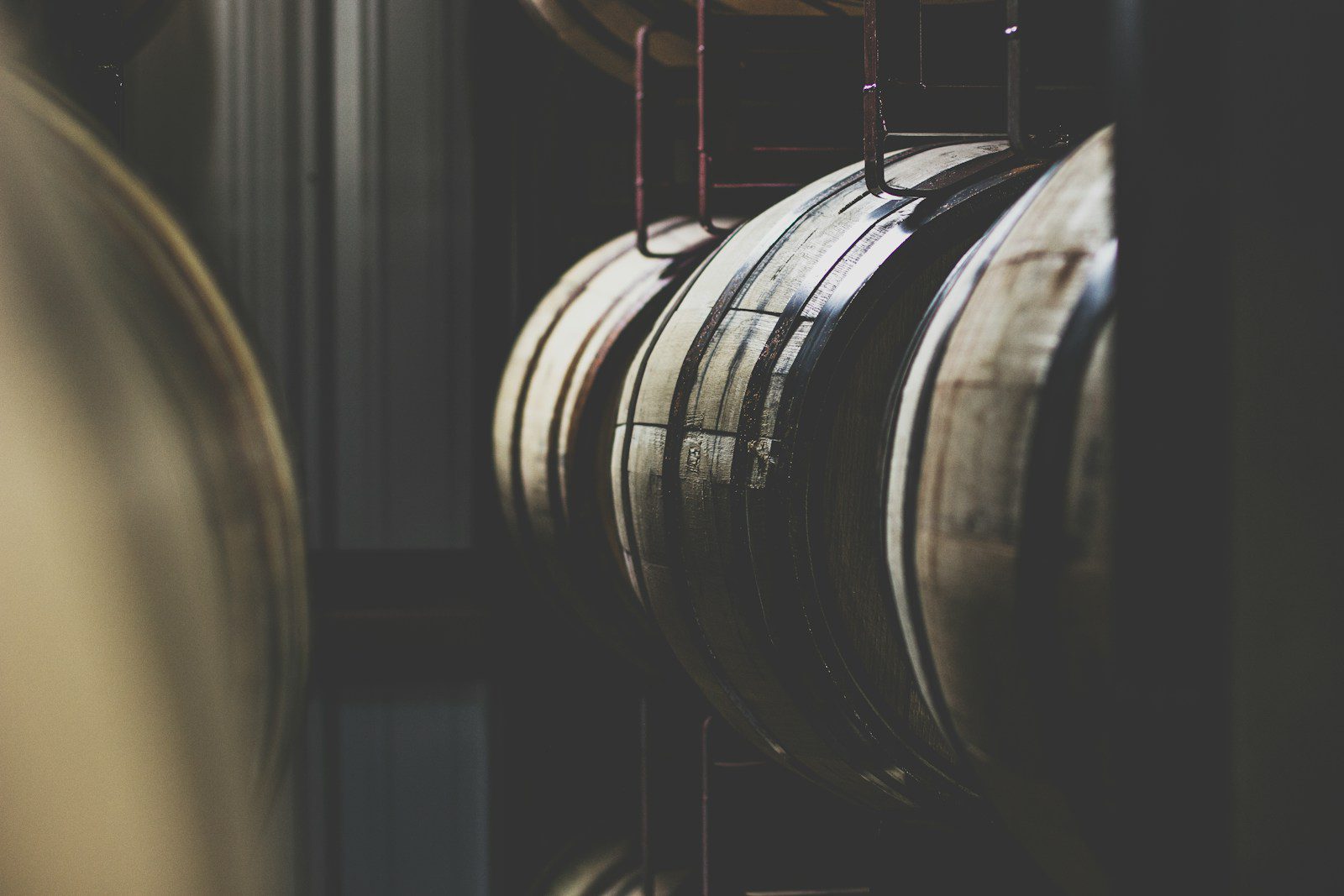
Oak wood contains a complex structure of cellulose, hemicellulose, and lignin. As the alcohol sits in the barrel, it breaks down the wood and extracts these polyphenols. When you drink the whisky, these tannins bind to the proteins in your saliva, stripping away the lubrication in your mouth. This creates the “drying” sensation.
2. The Tea Bag Analogy
The easiest way to understand how whisky tannins work is to think about a cup of tea.
- 1 Minute Steep: The tea is light, sweet, and fragrant. It feels smooth in your mouth.
- 5 Minute Steep: The tea is dark, robust, and has a pleasant grip on the tongue. This is structure.
- 30 Minute Steep: The tea is black, bitter, and instantly dries out your mouth. It is undrinkable without milk or sugar.
Whisky aging works the same way. A 10-year-old whisky usually has a gentle balance. A 50-year-old whisky runs the risk of being like the 30-minute tea—so full of wood extractives that the original flavor of the spirit is lost.
Does age matter?
Read about Age Statements in our Glossary (Vol 110).
3. American vs. European Oak
Not all trees are created equal. The species of oak used for the barrel has a massive impact on the tannin level.
American White Oak (Quercus Alba)
This is used for Bourbon. It is dense and contains high levels of vanillin and lactones (coconut flavors) but relatively low tannins. This makes American whiskey sweeter and creamier.
European Oak (Quercus Robur)
This is often used for Sherry casks in the Scotch industry. It has a looser grain structure and contains very high tannins (gallic acid).
This is why a heavily sherried Scotch (like a Macallan or Glendronach) often feels “drier” and more spicy than a Bourbon-matured Scotch.
4. Tasting Notes: How to Spot Them
When writing tasting notes, professionals use specific vocabulary to describe the presence of tannins. If you see these words, expect a drying finish:
- “Grippy”: The liquid feels like it is grabbing your tongue.
- “Leather”: A classic note found in older whiskies.
- “Black Tea”: The specific bitterness found in Earl Grey.
- “Walnut / Walnut Skin”: That papery, dry texture of a raw nut.
- “Cigar Box”: A mix of cedar wood and tobacco leaf dryness.
Pro Tip:
If a whisky is too tannic and dry, add a few drops of water. The water helps break the surface tension and can sometimes release sweeter oils that mask the dryness.
5. The Danger of “Over-Oaked” Whisky
There is a myth that “older is always better.”
In reality, whisky has a peak window. If you leave a spirit in a cask for too long (especially in hot climates like Texas or Taiwan), the wood takes over completely.
We call this “Over-oaked.”
An over-oaked whisky loses all its fruity, floral, or grainy character. It simply tastes like liquid sawdust. It becomes intensely bitter and astringent. Master Blenders spend their lives trying to pull the whisky from the cask before this happens, balancing the “subtractive” aging (removing harshness) with the “additive” aging (gaining tannins).
Love heavy flavor?
Check out Peated Bourbon for a different kind of intensity.
Summary: Balance is Key
Whisky tannins are the skeleton of the spirit. They provide the structure that holds the flavor together.
Without them, whisky would be flabby and sweet. But like a skeleton, you don’t want to see it too clearly.
The next time you sip a mature dram, pay attention to the finish. Does it dry your cheeks? Does it make you want to smack your lips? That is the ancient oak tree speaking to you, decades after it was cut down.
Become a Certified Expert
Take your knowledge from “hobbyist” to “connoisseur.” Join our Virtual Whiskey Tasting VIP program and get guided lessons, rare bottle alerts, and tasting notes sent straight to your inbox.