

Whisky Esters: Where Fruit Flavors Come From (The Science of Flavor)
Sip & Learn: Volume 127
Whisky is made from three ingredients: grain, water, and yeast.
So why does your Glenfiddich taste like green apples? Why does your Jack Daniel’s smell like bananas? And why does your expensive single malt have notes of pineapple and dried apricots?
None of these fruits were added to the barrel. The answer lies in organic chemistry.
These fruity flavors are caused by chemical compounds called Whisky Esters. They are the microscopic architects of flavor, created during the chaotic magic of fermentation.
In this guide, we are going to put on our lab coats (briefly) to explain how a pot of bubbling porridge transforms into a liquid fruit basket.
Table of Contents
Click below to jump to a section:
1. What is an Ester?
An ester is an organic compound that gives fruits and flowers their smell.
When you smell a ripe strawberry, you are smelling esters. When you smell a rose, you are smelling esters.
In the world of whisky, these esters are created primarily during fermentation. The yeast eats the sugar in the grain to create alcohol and carbon dioxide. But yeast is a messy eater. It also produces dozens of other byproducts, including flavor compounds.
Without esters, whisky would just smell like rubbing alcohol (ethanol) and wet dog.
2. The Formula: Alcohol + Acid
Here is the simple chemistry equation:
Alcohol + Carboxylic Acid = Ester
During fermentation, yeast creates various types of alcohols (ethanol, methanol, etc.) and various acids. When these two molecules collide, they bond together to form an ester.
This reaction is called esterification.
The type of alcohol and the type of acid determine the flavor. A “short chain” acid might create a solvent smell, while a “long chain” acid creates soapy or oily textures. The “middle chain” acids are the sweet spot—that’s where the fruit lives.
3. Common Esters (Banana & Apple)
You have likely tasted these whisky esters without knowing their names.
- Isoamyl Acetate: This is the most famous one. It smells exactly like Banana or pear drops. It is very common in Jack Daniel’s and many Irish whiskeys.
- Ethyl Hexanoate: This smells like crisp Green Apple. It is the signature note of Glenfiddich and many Speyside malts.
- Ethyl Butyrate: This provides notes of Pineapple and tropical fruit.
- Ethyl Lactate: A buttery, creamy, slightly coconut aroma.
Pro Tip:
If you want to train your nose, buy a bag of “Runts” candy. The artificial banana flavor in that candy is pure Isoamyl Acetate—the exact same compound found in your whiskey.
4. Fermentation Time Matters
Distillers can control how fruity their whisky is by changing the fermentation time.
Short Fermentation (approx 48 hours):
The yeast eats the sugar, creates alcohol, and stops. This produces a nutty, cereal-forward spirit.
Long Fermentation (55+ hours):
After the yeast eats all the sugar, it gets stressed. It starts to die and break down (autolysis). This creates complex acids that react with the alcohol to create massive amounts of fruity esters.
Distilleries like Glenmorangie use very long fermentation times to ensure their spirit is floral and fruity before it even hits the still.
Want to know about consistency?
Read our guide to Sour Mash and Yeast (Vol 122).
5. Copper Contact: The Polisher
Once the esters are created in the wash, they must survive distillation.
This is where copper comes in. Copper strips out heavy, sulfurous compounds (which smell like rotten eggs) and allows the lighter, fruity esters to shine through.
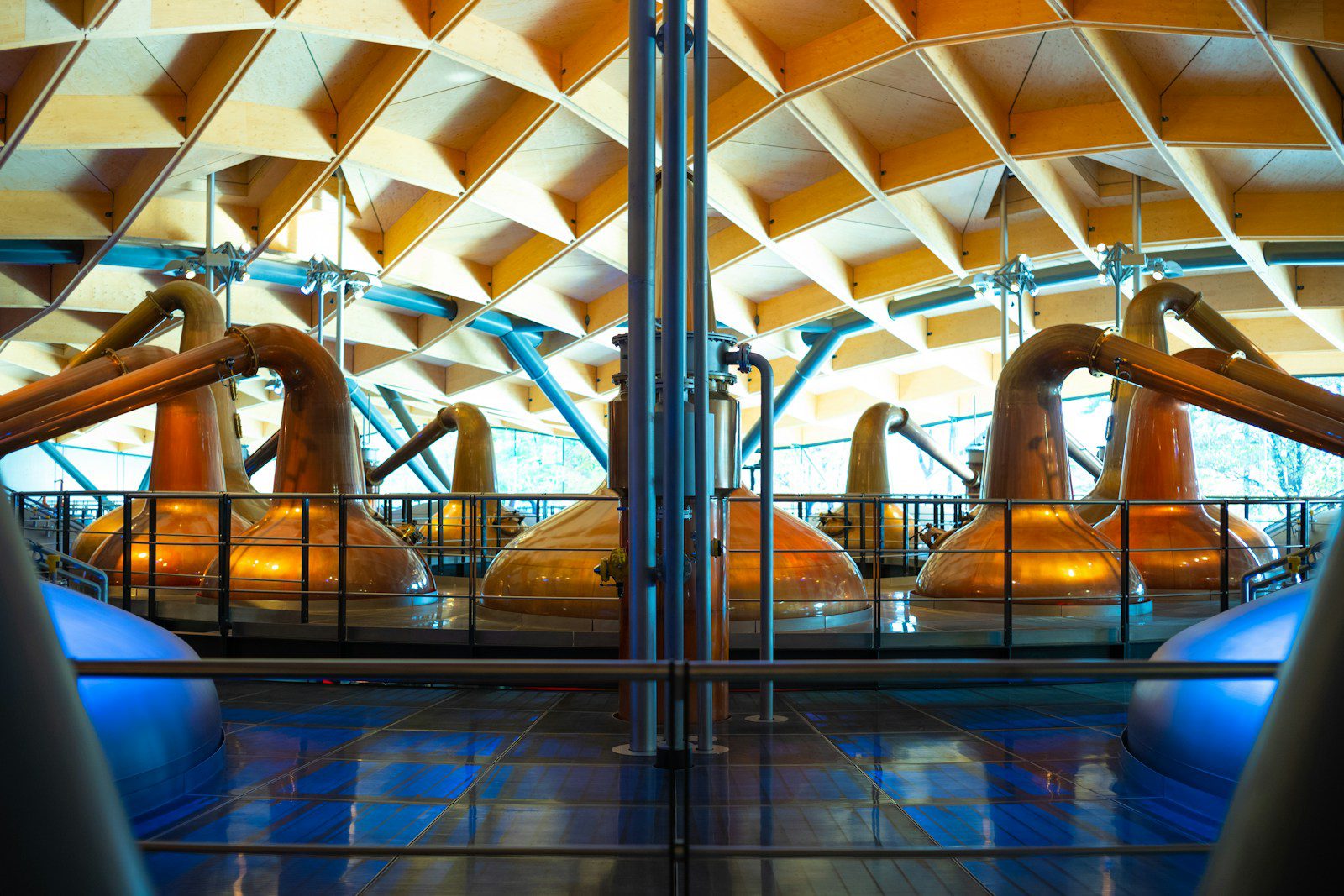
Tall stills with lots of copper contact (like at Glenmorangie) produce light, ester-heavy spirits. Short, squat stills (like at Macallan) allow heavier oils to pass through, masking some of the lighter fruit notes with weight and texture.
Copper vs Condensers?
See how equipment changes flavor in our Condenser Guide (Vol 113).
Summary: Trust the Yeast
The next time you nose a glass of whisky and smell orchard fruits, don’t look for additives on the label.
You are smelling the hard work of billions of yeast cells performing chemistry in a dark tank.
Whisky Esters are the soul of the spirit’s character. They turn simple grain water into the complex, aromatic liquid we love.
Become a Certified Expert
Take your knowledge from “hobbyist” to “connoisseur.” Join our Virtual Whiskey Tasting VIP program and get guided lessons, rare bottle alerts, and tasting notes sent straight to your inbox.