

What is Sour Mash? The Secret to Consistency (Explained)
Sip & Learn: Volume 122
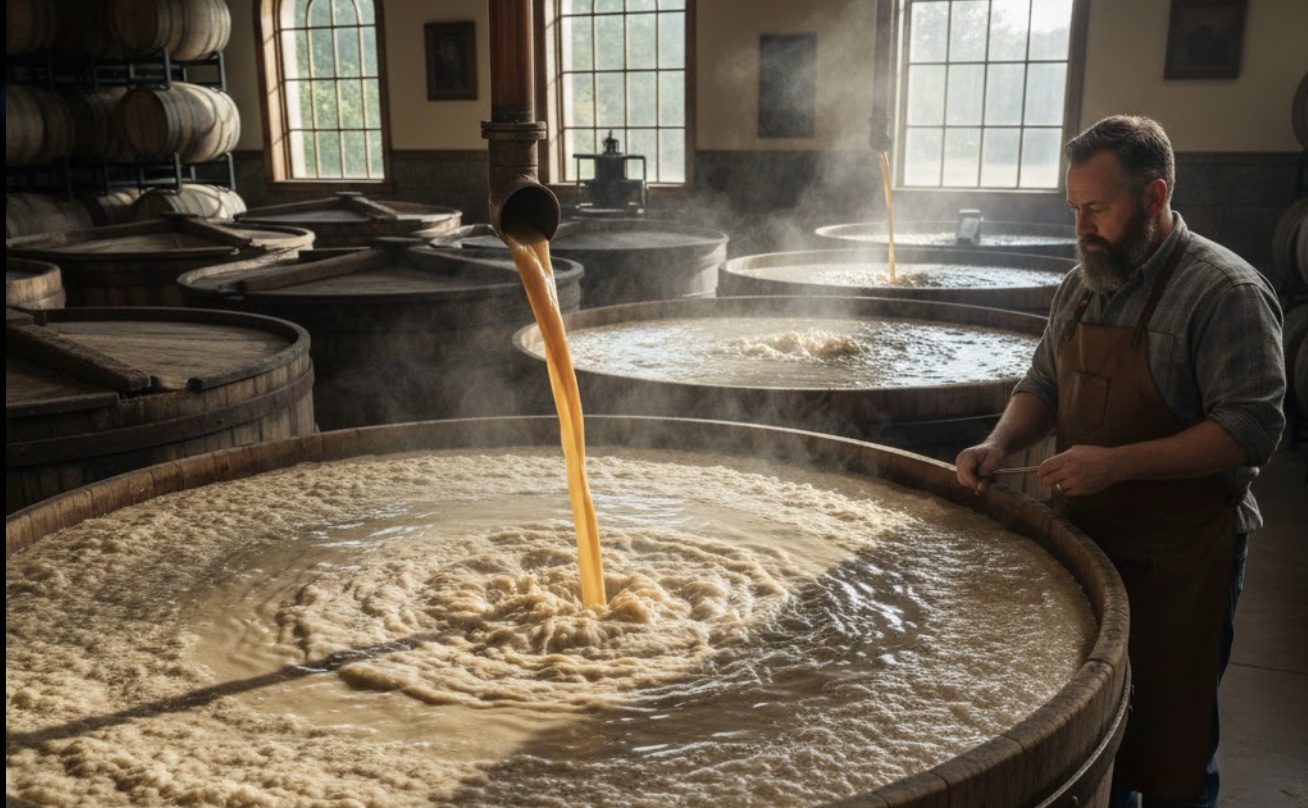
If you pick up a bottle of Jack Daniel’s or almost any Kentucky Bourbon, you will likely see the words “Sour Mash” printed proudly on the label.
For the beginner, this term can be confusing. It sounds unappealing. After all, nobody wants to drink milk that has gone sour, so why would we want to drink whiskey made from a sour mash?
Here is the first thing you need to know: Sour Mash whiskey does not taste sour.
The term refers to a specific scientific process used during fermentation, not the flavor of the final liquid. It is a technique borrowed from bakers, chemists, and the laws of nature to ensure that every batch of whiskey tastes exactly like the one before it.
In this guide, we are going to answer the question “What is Sour Mash?” and explain why it is the backbone of the American whiskey industry.
Table of Contents
Click below to jump to a section:
1. The Sourdough Bread Analogy
The easiest way to understand what is sour mash is to look at sourdough bread.
When a baker makes sourdough, they don’t start with fresh yeast every time. They keep a “starter”—a piece of live, fermented dough from the previous day’s batch. They add this starter to the new flour and water.
This ensures that the specific colony of yeast continues to thrive and that the bread tastes consistent day after day.
Sour Mash is the whiskey equivalent of a sourdough starter. It connects the past to the present.
2. The Science: Using “Backset”
In the distillery, the “starter” is called Backset (or Stillage).
When whiskey is distilled, the alcohol boils off and is collected. What is left at the bottom of the still is a hot, acidic, liquid slurry of cooked grains and water. This leftover liquid is the backset.
The Process:
To create a sour mash, the distiller takes some of this leftover acidic backset and adds it to the new fermenter filled with fresh corn, rye, and water.
Typically, a sour mash recipe consists of 25% to 33% backset. The rest is fresh ingredients.
What grains are used?
Read about Mash Bills in our Glossary (Vol 110).
3. Why Do It? (pH & Consistency)
Distillers don’t just do this for tradition; they do it for survival.
1. Controlling pH (Acidity):
Yeast loves an acidic environment. Bacteria hates it. By adding the acidic backset to the new mash, the distiller lowers the pH level immediately. This kills off unwanted bacteria that could spoil the batch or create “off” flavors (like vomit or rotten eggs). It effectively “sours” the mash to protect the yeast.
2. Consistency:
Big brands like Jim Beam or Jack Daniel’s need every bottle to taste identical, whether it was bought in Tokyo or Texas. By chaining the batches together (Batch A starts Batch B, Batch B starts Batch C), they ensure a continuous genetic lineage of flavor.
4. Sweet Mash vs. Sour Mash
If Sour Mash uses leftovers, what is Sweet Mash?
Sweet Mash means the distiller starts with 100% fresh water, fresh grain, and fresh yeast. No backset is added.
The Risk: Without the acid from the backset, the mash is more susceptible to bacterial infection. It requires obsessive cleaning and sanitization.
The Reward: Sweet mash whiskies tend to have a cleaner, softer, and more grain-forward profile. Brands like Wilderness Trail and Peerless have become famous for championing the Sweet Mash process, arguing it creates a purer flavor.
Pro Tip:
Michter’s is one of the few brands that releases both a standard “Sour Mash” whiskey and a toasted “Sour Mash” whiskey, highlighting the process on the label.
5. Does It Change the Flavor?
This is a subject of debate.
Most experts agree that Sour Mash creates a “deeper” and more robust flavor profile because the backset concentrates certain compounds. However, the primary goal is not to add a specific flavor, but to prevent bad flavors.
So, when you ask “what is sour mash,” remember: it is a quality control mechanism. It ensures that your Bourbon tastes like Bourbon, rather than a science experiment gone wrong.
Want to taste a unique twist?
Check out the “Backsetter” Peated Bourbon from New Riff (Vol 116).
Summary: The Industry Standard
Almost all major Bourbons and Tennessee Whiskeys are Sour Mash whiskeys. It is the industry standard for a reason.
It protects the yeast, fights bacteria, and guarantees consistency.
So the next time you pour a glass of Jack Daniel’s, don’t worry about the word “sour.” It just means the distiller was smart enough to use a little bit of the past to secure the future of the spirit.
Become a Certified Expert
Take your knowledge from “hobbyist” to “connoisseur.” Join our Virtual Whiskey Tasting VIP program and get guided lessons, rare bottle alerts, and tasting notes sent straight to your inbox.