

What is Cask Strength Whisky? The Ultimate Guide to High Proof (2026)
Sip & Learn: Volume 28
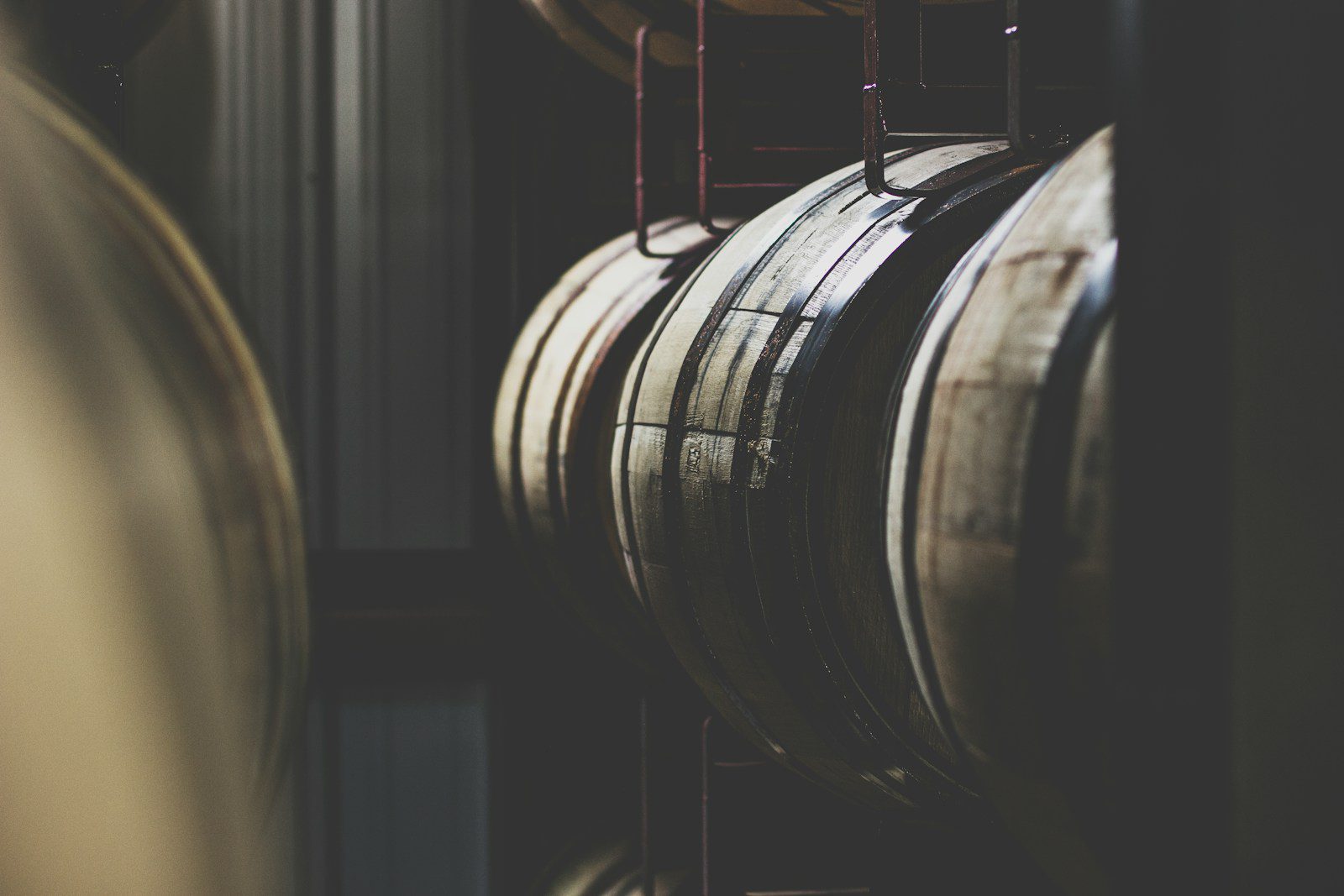
If you look at the top shelf of any serious bar, you will see bottles labeled Cask Strength Whisky.
You might notice two things immediately. First, the price is higher. Second, the alcohol percentage (ABV) is terrifyingly high—often between 55% and 65%.
For a beginner, this looks like a recipe for a burning throat.
But for an expert, Cask Strength Whisky is the holy grail. It is the purest, most flavorful, and most honest representation of the spirit.
Why pay more for something that might hurt to drink? Because you aren’t paying for water.
In this guide, we will break down exactly what Cask Strength Whisky is, the science behind the high proof, and the secret technique to drinking it without the burn.
Table of Contents
Click below to jump to a section:
1. Definition: What is Cask Strength Whisky?
To understand Cask Strength Whisky, you have to understand how normal whisky is bottled.
When whisky comes out of the barrel after aging, it is naturally very strong (usually between 50% and 65% ABV).
However, most standard bottles (like Glenfiddich 12 or Jack Daniel’s) are sold at 40% or 43% ABV.
How do they get it down to 40%?
They add water. The distillery takes the whisky from the barrel and dilutes it with industrial amounts of water until it hits the target strength.
The Rule:
Cask Strength Whisky means the liquid in the bottle is the exact same strength as it was in the barrel. No water was added before bottling.
This means every batch will be different. One batch might be 58.2%, the next might be 59.1%. It is raw and untouched.
2. The Economics of Water (Why it Costs More)
You might wonder why Cask Strength Whisky costs $100 when the standard version costs $50.
It comes down to simple math.
Imagine a distillery has one barrel of whisky at 60% ABV.
- Scenario A (Standard): They dilute it with water down to 40%. This increases the total volume of liquid. They can fill 300 bottles.
- Scenario B (Cask Strength): They bottle it straight at 60%. They can only fill 200 bottles.
Because they get fewer bottles from the same barrel, they have to charge more per bottle.
Think of it like Orange Juice:
Standard whisky is “from concentrate” (water added). Cask Strength Whisky is fresh-squeezed. You are paying for the concentration of flavor.
3. The Science: Why High Proof Tastes Better
Alcohol carries flavor. The esters, congeners, and fatty acids that give whisky its taste (vanilla, fruit, smoke) are soluble in alcohol, not water.
When you filter a whisky and water it down, you are physically removing texture.
Cask Strength Whisky is almost always “Non-Chill Filtered.”
Standard whiskies are chilled to near freezing and passed through a filter to remove oils (so they don’t go cloudy). Cask strength whiskies keep those oils.
The Result:
– Mouthfeel: It feels thick, oily, and creamy on the tongue.
– Finish: The flavor lasts for minutes, not seconds.
– Intensity: The aromas fill the room as soon as you uncork it.
Love intense flavor? This is especially true for Bourbon.
Check out our guide to the Best Bourbons (including high proof options) here.
4. How to Handle the Burn (The Water Trick)
The biggest mistake beginners make with Cask Strength Whisky is drinking it like a shot. If you swallow 60% ABV liquor quickly, it will just burn. You won’t taste anything.
You are supposed to act like a Master Blender. You are supposed to add water yourself.
The Cask Strength Ritual:
- Pour the whisky neat. Take a tiny sip. Experience the raw power.
- Add 3-4 drops of room temperature water (using a pipette or spoon).
- Swirl the glass. Look for “viscimetric whorls” (oily lines) in the liquid.
- Taste again. The burn will decrease, and hidden fruity/floral notes will pop out.
By buying Cask Strength Whisky, you control the dilution. You can drink it at 55%, or water it down to 45%. You are the boss.
Need the right tools?
Read our full guide on adding water to whisky here.
5. Cask Strength vs. Barrel Proof vs. Full Proof
The terminology changes depending on where the bottle comes from, but they all mean roughly the same thing.
- Cask Strength: Used mostly for Scotch (e.g., Aberlour A’bunadh, Laphroaig Cask Strength).
- Barrel Proof: Used mostly for Bourbon (e.g., Elijah Craig Barrel Proof). It means the same thing—no water added.
- Full Proof: This is slightly different (e.g., 1792 Full Proof). It means the whisky is diluted back to the original entry proof (the strength it was when it entered the barrel years ago), not necessarily the strength it is right now.
The Angels’ Share Factor
Why isn’t all Cask Strength Whisky the same strength? Because of the Angels’ Share.
Every year, about 2% of the liquid in a barrel evaporates. In hot climates (like Kentucky), water evaporates faster, so the alcohol percentage actually goes up over time (sometimes hitting 70%!).
In cool climates (like Scotland), alcohol evaporates faster, so the strength goes down over time. A 40-year-old Scotch might naturally drop to 42% ABV without any water added at all.
6. Summary: Should You Buy It?
If you are a complete beginner, stick to standard 40-46% bottles for now.
But if you are looking to upgrade your palate, Cask Strength Whisky is the best investment you can make.
It offers more flavor, a richer texture, and the ability to customize your drink with water. It transforms drinking whisky from a passive activity into an interactive experiment.
Once you get used to the intensity of 60% ABV, it is very hard to go back to the watery standard stuff.
Become a Certified Expert
Take your knowledge from “hobbyist” to “connoisseur.” Join our Virtual Whiskey Tasting VIP program and get guided lessons, rare bottle alerts, and tasting notes sent straight to your inbox.