

How Whisky is Made: The 5 Step Process Explained (2026)
Sip & Learn: Volume 29
To the outsider, it seems like magic. You take simple grain, water, and yeast, and somehow turn it into liquid gold.
But understanding how whisky is made is not magic—it is chemistry.
Every single flavor you taste, from the vanilla notes to the smoky peat, comes from a specific decision made during the production process.
Why does Scotch taste different from Bourbon? Why is some whisky clear and some dark?
It all comes down to the “Five Pillars” of production. Whether you are drinking a $20 bottle or a $2,000 bottle, the process is fundamentally the same.
In this guide, we are going to walk through the factory floor and explain exactly how whisky is made, step-by-step.
Table of Contents
Click below to jump to a step:
Step 1: Malting (Waking the Grain)
The first step in understanding how whisky is made is dealing with the raw ingredient: Barley.
Barley is a seed. Inside that seed is starch. Yeast (which creates alcohol) cannot eat starch; it can only eat sugar. So, the distiller has to trick the barley into converting its starch into sugar.
The Malting Process:
- Steeping: The barley is soaked in water for 2-3 days.
- Germination: The wet barley is spread out on a floor. It begins to sprout (germinate). As it grows, it produces enzymes that convert starch into fermentable sugars.
- Kilning: Before the sprout eats all the sugar, the distiller stops the process by heating (drying) the grain in a giant kiln.
Flavor Tip: The Peat Connection
If the distiller uses hot air to dry the barley, the whisky will be unpeated. If they burn Peat to dry the barley, the smoke sticks to the grain. This is how smoky whisky is born.
Love the smell of smoke?
Read our deep dive on Peated vs Unpeated Whisky here.
Step 2: Mashing (Extracting the Sugar)
Now that the barley is dry and full of sugar (it is now called “Malt”), it needs to be ground down.
The malt is put through a mill and crushed into a coarse flour called Grist.
The Grist is poured into a giant stainless steel vessel called a Mash Tun. Hot water is added.
Think of this like making a giant cup of tea. The hot water dissolves the sugars from the grist. The result is a sticky, sweet, sugary liquid called Wort.
The solid husks (draff) are filtered out and usually sent to local farmers to feed cattle. The liquid Wort moves to the next stage.
Step 3: Fermentation (Making the Beer)
This is where the alcohol is created. The cooled Wort is pumped into giant wooden or steel tanks called Washbacks.
The distiller adds Yeast.
The yeast wakes up and starts eating the sugar in the Wort. As it eats, it produces two byproducts: Carbon Dioxide and Alcohol.
This process takes about 48 to 96 hours. The liquid bubbles violently.
At the end of fermentation, you have a liquid called Wash. It is essentially a strong, sour beer (about 8-9% ABV). If you drank it, it would taste like a very funky ale without hops.
Step 4: Distillation (Concentrating the Alcohol)
Now we need to turn that beer into spirit. This is the most dramatic part of how whisky is made.
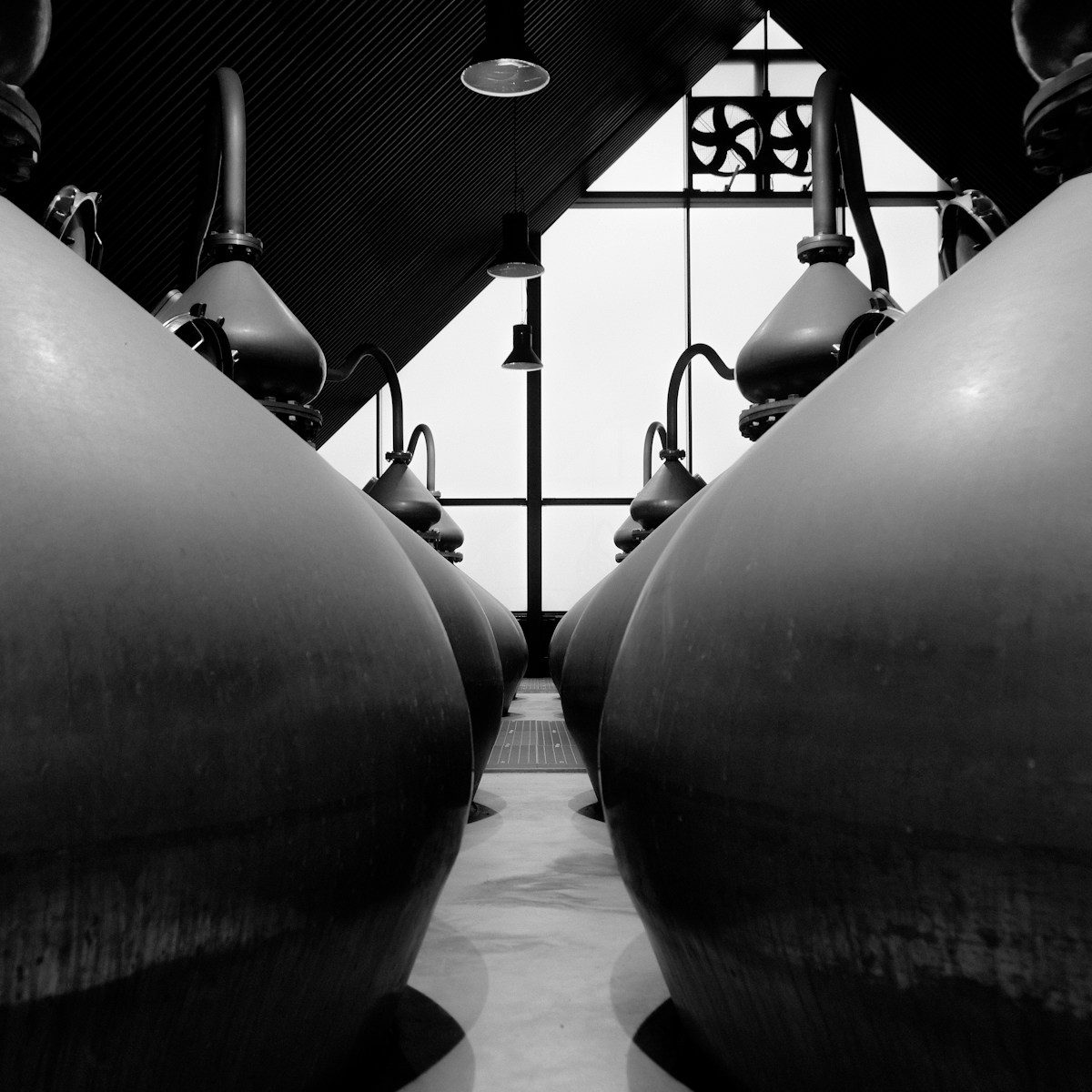
The “Wash” enters the Copper Pot Stills. These are beautiful, onion-shaped kettles that are heated from the bottom.
The Science: Alcohol boils at a lower temperature (173°F) than water (212°F). When you heat the liquid, the alcohol turns into steam first, rising up the neck of the still, leaving the water behind.
Scotch whisky is usually distilled twice:
- First Distillation (Wash Still): Produces a rough liquid called “Low Wines” (about 25% ABV).
- Second Distillation (Spirit Still): Produces the final “New Make Spirit” (about 70% ABV).
The distiller must be careful. The first part of the spirit (Foreshots) is toxic. The last part (Feints) smells unpleasant. They only keep the “Middle Cut” (the Heart) to put into barrels.
Not all stills are the same. The shape of the still changes the flavor.
Learn about Pot Stills vs. Column Stills in our guide here.
Step 5: Maturation (The Wood)
When the spirit comes off the still, it is clear. It looks like vodka. It is not legally whisky yet.
To be called Scotch, it must be aged in oak casks in Scotland for a minimum of 3 years. (Bourbon has different rules).
The clear spirit is filled into oak casks (usually American Oak or European Oak). It sits in a dark warehouse for years, sometimes decades.
Three things happen here:
1. The wood removes harsh chemicals.
2. The wood adds flavor (vanilla, caramel, spice).
3. The wood adds 100% of the color.
The Angels’ Share:
Every year, about 2% of the whisky evaporates through the pores of the wood. This lost liquid is poetically called “The Angels’ Share.” This is why older whisky is so rare and expensive—half of it has vanished!
Does age equal strength? Not always.
Read our guide on Cask Strength Whisky to understand ABV.
Summary: How Whisky is Made
From the malting floor to the copper still, and finally to the oak cask, the journey of how whisky is made is a miracle of time and chemistry.
Next time you pour a dram, remember that it took years of patience to get that liquid into your glass.
Become a Certified Expert
Take your knowledge from “hobbyist” to “connoisseur.” Join our Virtual Whiskey Tasting VIP program and get guided lessons, rare bottle alerts, and tasting notes sent straight to your inbox.