

The History of Prohibition: How it Changed Bourbon Forever (2026)
Sip & Learn: Volume 65
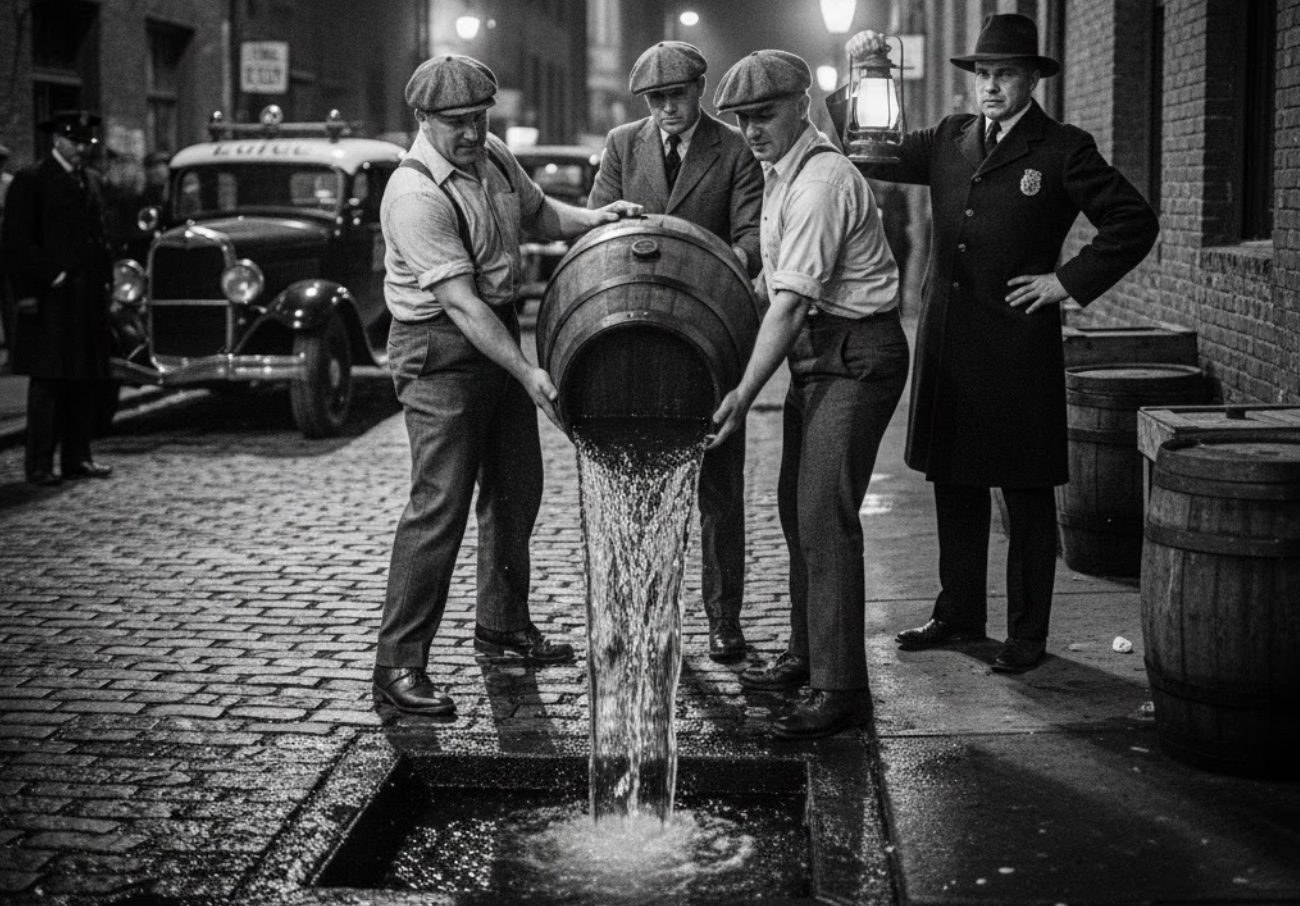
On January 17, 1920, the United States went dry.
The 18th Amendment to the Constitution banned the manufacture, sale, and transportation of intoxicating liquors. For 13 years, the legal alcohol industry ceased to exist.
However, the history of Prohibition Bourbon is not just a story of speakeasies and gangsters like Al Capone. It is the story of how the flavor of American Whiskey was fundamentally altered forever.
Have you ever wondered why Bourbon must be aged in New Charred Oak? Or why Bourbon is sweeter than Rye? Or why we trust “Bottled-in-Bond”?
The answer to all of these questions lies in the Noble Experiment.
In this guide, we are going to explore the history of Prohibition Bourbon and how those 13 dry years created the rules we still follow in 2026.
Table of Contents
Click below to jump to a section:
1. The Night the Lights Went Out
Before 1920, there were thousands of distilleries across the United States. New York, Pennsylvania, and Maryland were huge producers of Rye Whiskey. Kentucky was known for Bourbon.
When the Volstead Act passed, they were given a choice: close down or face federal prison.
Most distilleries dismantled their equipment and sold the copper for scrap. The vast stocks of aging whiskey barrels were either destroyed, stolen, or locked away in government warehouses.
The history of Prohibition Bourbon is a history of extinction. Entire styles of whiskey (like Pennsylvania Monongahela Rye) vanished from the map and are only just being rediscovered today.
2. The Medicinal Loophole: Prescription Whiskey
There was one exception to the rule. The government allowed whiskey to be sold for “Medicinal Purposes.”
Six distilleries were granted licenses to continue bottling existing stocks for pharmacies. These included Brown-Forman (Old Forester), Schenley, and Frankfort Distilleries.
The Prescription:
A doctor could prescribe one pint of “Spiritus Frumenti” (Whiskey) every ten days to a patient for ailments ranging from anxiety to the flu. Unsurprisingly, the number of “sick” people in America skyrocketed during the 1920s.
This loophole is the only reason brands like Old Forester survive today. They were able to keep their lights on while everyone else went bankrupt.
Want to taste a survivor?
Check out our review of Old Forester in the Best Bourbons guide.
3. The “New Oak” Law: A Job Creation Scheme
This is the biggest flavor impact in the history of Prohibition Bourbon.
Before 1920, distillers often reused their barrels. They would use them until they fell apart.
When Prohibition ended in 1933, the economy was in the Great Depression. The Cooper’s Union (the people who make barrels) and the Lumber industry lobbied the government.
They argued: “If you force distillers to use a BRAND NEW barrel every single time, it will create jobs for loggers, truckers, and coopers.”
The government agreed. They passed a law stating that Bourbon must be aged in New Charred Oak Containers.
The Flavor Result:
Because Bourbon always goes into fresh wood, it extracts massive amounts of Vanillin and Lactones (coconut flavor). This makes Bourbon significantly sweeter and more vanilla-forward than Scotch, which reuses the barrels afterwards.
Learn the science of wood.
Read our guide on Bourbon Casks vs Sherry Casks.
4. The Death of Rye and the Rise of Corn
Before Prohibition, Rye was the King of American Whiskey. It was the spirit of choice in the North East.
However, Rye is difficult to grow and difficult to distill (it gets sticky and clogs the stills).
When the industry restarted in 1933, distillers needed to make money fast. Corn was cheap, subsidized by the government, and easy to grow.
Large industrial distilleries switched their mash bills to be Corn-dominant (Bourbon). The spicy, difficult Rye whiskey fell out of fashion. Americans developed a “Sweet Tooth” for corn bourbon, and Rye almost went extinct until the cocktail revival of the 2000s.
Rye is back.
Understand the difference in our Rye vs Bourbon comparison.
5. The Rise of “Rotgut” and Consumer Trust
During Prohibition, bootleggers made terrible, dangerous spirits known as “Rotgut” or “Bathtub Gin.”
After repeal, consumers were terrified. They didn’t know if the clear liquid in the bottle was safe to drink.
This is why the Bottled-in-Bond stamp became so important again. Although the act was passed in 1897 (before Prohibition), it became the gold standard in the 1930s.
The Green Stamp proved the government had supervised the production. It proved the whiskey was at least 4 years old and 100 proof. It was the only way to guarantee safety.
To this day, Bottled-in-Bond remains a sign of high quality and value.
What does the stamp mean?
Read our full guide on Bottled-in-Bond Whiskey here.
6. Summary: The Legacy of Prohibition
The history of Prohibition Bourbon is a tragedy, but it created the industry we know today.
- It gave us the New Oak Law (creating the vanilla flavor).
- It cemented Bourbon (Corn) as the national spirit over Rye.
- It strengthened the Bottled-in-Bond quality standard.
Next time you pour a glass of Kentucky Straight Bourbon, remember that its sweet, oaky flavor profile is a direct result of a failed government experiment in the 1920s.
Become a Certified Expert
Take your knowledge from “hobbyist” to “connoisseur.” Join our Virtual Whiskey Tasting VIP program and get guided lessons, rare bottle alerts, and tasting notes sent straight to your inbox.