
Copper Contact: Why Tall Stills Make Light Spirit (2026 Guide)
Sip & Learn: Volume 74
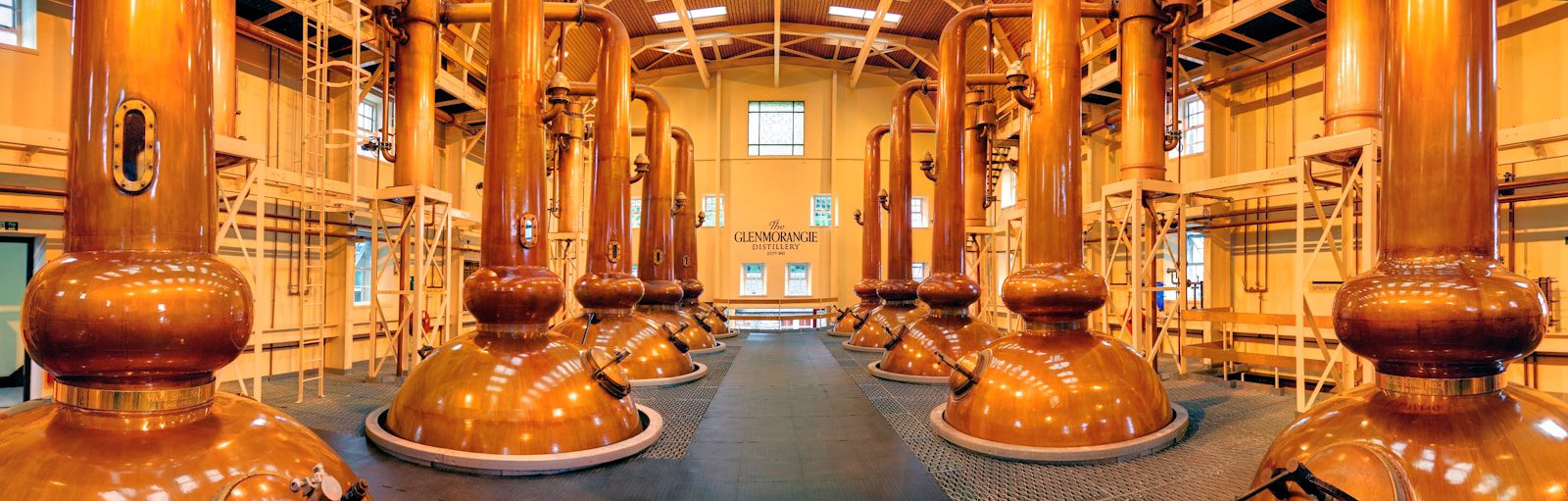
When you walk into a distillery, the first thing that takes your breath away is the sight of the gleaming Copper Stills Whisky is made in.
They are beautiful. They look like giant golden swans or onions.
But copper is not chosen for its beauty. It is chosen for its chemistry.
Why do some distilleries have stills as tall as giraffes, while others have short, squat stills? Why do some pipe arms point up, while others point down?
It isn’t an architectural choice; it is a flavor choice. The shape of the copper dictates the “weight” of the spirit.
In this guide, we are going to explain the physics of Reflux and how the height of the still determines whether your whisky tastes like light flowers or heavy leather.
Table of Contents
Click below to jump to a section:
1. Why Copper? The Chemical Sacrifices
Before we talk about shape, we must talk about material. Why are Copper Stills Whisky producers’ only choice? Why not stainless steel, which is cheaper and lasts longer?
The answer is Sulphur.
During fermentation, yeast creates sulphur compounds (Mercaptans). These smell like rotten eggs, burning rubber, and struck matches.
If you distill in stainless steel, those smells stay in the liquid. The whisky would be undrinkable.
Copper is chemically active. When hot alcohol vapor hits copper, it reacts. The copper grabs the sulphur molecules and strips them out of the vapor, turning them into Copper Sulfate (a blue-green solid that is cleaned away).
The Sacrifice:
This reaction eats away at the copper. The walls of the still get thinner every year. A distillery has to replace its stills every 10-15 years at a cost of millions. They are literally sacrificing the metal to purify your drink.
Want to know more about the “Meaty” flavor?
Read our guide on Sulfur in Whisky here.
2. The Physics of Reflux: The Conversation
Reflux is the most important word in distillation physics.
When you boil the liquid, vapors rise up the neck of the still.
- Light Vapors: (Alcohol, Fruit Esters) are very volatile. They fly up easily.
- Heavy Vapors: (Fusel Oils, Fats, Sulfur) are heavy. They struggle to climb.
As the vapors rise, they hit the cooler copper walls of the neck. The heavy vapors turn back into liquid and fall back down into the boiling pot to be distilled again. This is Reflux.
High Reflux = Cleaner Spirit.
The more the spirit falls back down, the “lighter” and “fruitier” the final whisky will be.
Low Reflux = Heavier Spirit.
If the vapors can escape easily, the heavy oils make it into the bottle. The whisky will be oily, waxy, and robust.
3. Tall Stills: The Glenmorangie Example
If you visit Glenmorangie, you will see the tallest stills in Scotland (5.14 meters high). They are as tall as a giraffe.
The Effect:
Because the neck is so long, the heavy, oily vapors cannot reach the top. Gravity pulls them back down (Reflux).
Only the lightest, purest, most floral alcohol vapors can make it all the way to the top and over the neck.
This is why Glenmorangie tastes like:
– Citrus
– Vanilla
– Flowers
– Peaches
It is chemically impossible for a still this tall to produce a heavy, oily spirit.
Like light whisky?
Check out our guide to Lowland Whisky (Triple Distillation).
4. Short Stills: The Macallan Example
Now, let’s look at The Macallan. Their stills are famously “Curiously Small.” They are short and fat.
The Effect:
Because the neck is short, the vapors don’t have far to travel. The heavy, oily compounds can easily boil over the top and get into the condenser. There is very little Reflux.
This creates a spirit that is:
– Oily (Viscous mouthfeel)
– Heavy
– Rich
This heavy “New Make Spirit” is perfect for aging in Sherry Casks. A light spirit would be overwhelmed by sherry oak, but the heavy Macallan spirit can stand up to it.
What is New Make?
See the step-by-step production process here.
5. The Lyne Arm Angle (Up vs Down)
At the top of the Copper Stills Whisky neck, there is a pipe that leads to the condenser. This is the Lyne Arm.
The angle of this pipe changes the flavor.
Upward Angle (Purifier)
If the arm points UP, gravity makes it hard for the vapor to escape. Liquid condenses in the pipe and runs back down into the still (Reflux).
Result: Lighter, cleaner spirit (e.g., Ardbeg).
Downward Angle (Rapid Flow)
If the arm points DOWN, gravity helps the vapor escape. Once it crosses the neck, it flows down into the condenser immediately. It cannot return to the still.
Result: Heavier, oilier spirit (e.g., Lagavulin).
Want to taste the oils?
Learn how to detect texture in our Tasting Guide.
6. Summary: Geometry is Flavor
The next time you look at a bottle of Single Malt, picture the still it came from.
Copper Stills Whisky production is a game of geometry.
- Tall & Thin Stills: Expect fruit, flowers, and elegance (Glenmorangie).
- Short & Fat Stills: Expect oil, weight, and meatiness (Macallan).
The copper doesn’t just hold the liquid; it shapes the soul of the whisky.
Become a Certified Expert
Take your knowledge from “hobbyist” to “connoisseur.” Join our Virtual Whiskey Tasting VIP program and get guided lessons, rare bottle alerts, and tasting notes sent straight to your inbox.