
Blended Malt vs Blended Scotch: The Monkey Shoulder Rule (2026)
Sip & Learn: Volume 76
If you look at a bottle of Johnnie Walker Black Label, it says “Blended Scotch Whisky.”
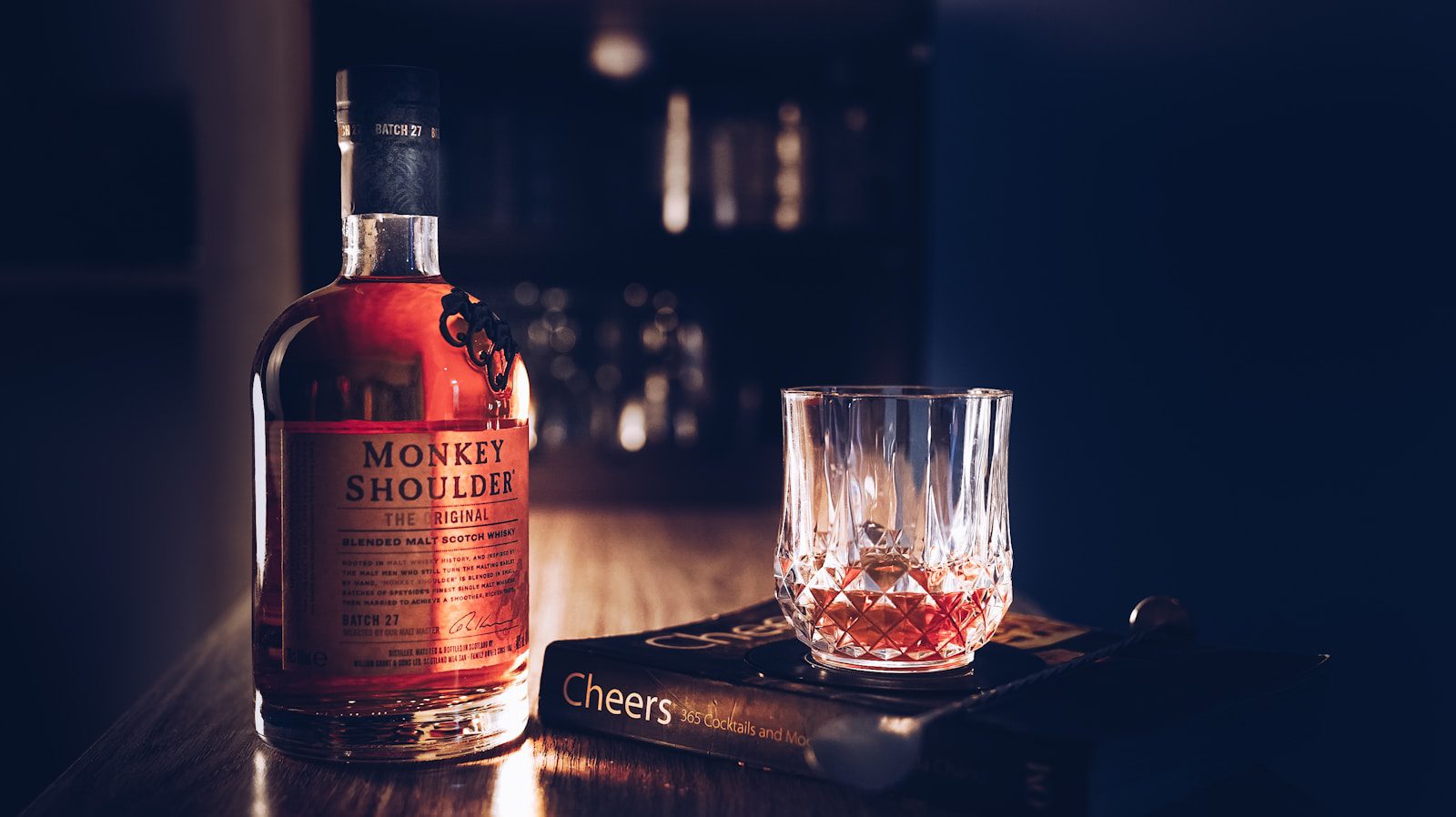
If you look at a bottle of Monkey Shoulder, it says “Blended Malt Scotch Whisky.”
That one little word—Malt—changes everything. It changes the ingredients, the production method, the price, and the flavor.
The battle of Blended Malt vs Blended Scotch is a battle between “Texture” and “Volume.”
Most beginners assume they are the same thing. They assume “Blend” means “Cheap.” This is a mistake.
Blended Malt is actually the secret weapon of the whisky world. It offers the richness of a Single Malt with the balance of a Blend, often for a fraction of the price.
In this guide, we are going to explain the strict legal definitions, the history of the “Cardhu Scandal” that defined these categories, and why you should probably be drinking more Blended Malt.
Table of Contents
Click below to jump to a section:
1. The Definition: The “Grain” Rule
To understand the difference in Blended Malt vs Blended Scotch, you have to look at the ingredients list.
The Golden Rule:
- Blended Scotch: Contains Malt Whisky AND Grain Whisky.
- Blended Malt: Contains ONLY Malt Whisky. (Zero Grain Whisky).
Why does this matter?
Malt Whisky is made from 100% Malted Barley in Pot Stills. It is oily, heavy, and flavorful.
Grain Whisky is made from Corn or Wheat in Column Stills. It is light, vodka-like, and cheap.
Therefore, “Blended Malt” is chemically closer to a Single Malt than it is to a standard Blend. It is essentially a “Super Blend” of premium ingredients.
What is Grain Whisky?
Read our guide on Single Grain Whisky here.
2. What is Blended Scotch? (Johnnie Walker)
Examples: Johnnie Walker, Chivas Regal, Dewar’s, Famous Grouse.
Blended Scotch makes up 90% of the global market.
It is created by taking flavorful Single Malts (like Caol Ila or Glenfiddich) and mixing them with a large volume of Grain Whisky (from Cameronbridge or Girvan).
The Grain Whisky acts as a canvas. It “stretches” the expensive malt, making the final product smoother, lighter, and more affordable.
Pros: Consistent, affordable, great for highballs.
Cons: Can lack texture and “weight” on the palate.
Looking for a budget bottle?
Check out our list of the Best Blended Scotch under $30.
3. What is Blended Malt? (Monkey Shoulder)
Examples: Monkey Shoulder, Johnnie Walker Green Label, Compass Box (Peat Monster, Spice Tree).
Formerly known as “Vatted Malt” or “Pure Malt,” this category is the connoisseur’s choice.
A Blended Malt is created by mixing two or more Single Malts from different distilleries together. No grain whisky is added.
For example, Monkey Shoulder is a blend of three Speyside Single Malts (Glenfiddich, Balvenie, and Kininvie).
Because it is 100% malted barley, it retains the heavy, oily texture of a Single Malt. However, because it comes from multiple distilleries, it cannot legally be called “Single.”
The Monkey Shoulder Rule:
If it tastes like a $60 Single Malt but costs $35, it is probably a Blended Malt. It is the best value in the industry.
4. History Lesson: The Cardhu Scandal
Why is the terminology for Blended Malt vs Blended Scotch so confusing? You can blame Diageo.
In 2003, the Cardhu distillery (which makes the key malt for Johnnie Walker) ran out of stock. They couldn’t make enough Single Malt to meet demand.
So, Diageo decided to mix Cardhu Single Malt with other single malts from different distilleries. They put it in the same square bottle. They kept the name “Cardhu.” But they changed the label from “Single Malt” to “Pure Malt.”
The Industry Revolted.
Competitors (like Glenfiddich) argued that consumers were being tricked into buying a blend thinking it was a Single Malt.
The Scotch Whisky Association stepped in. They rewrote the laws in 2009. They banned the terms “Pure Malt” and “Vatted Malt.” They mandated that any mix of malts must be called “Blended Malt Scotch Whisky.”
This legal battle clarified the difference for consumers, protecting the integrity of Single Malt.
Want to know more about production?
Read our deep dive on Single Malt vs Blended Whisky here.
5. Flavor Profile: Why Malt Matters
How does the absence of Grain Whisky affect the taste in the Blended Malt vs Blended Scotch comparison?
Blended Scotch (The Smoothness)
Because of the grain content, these whiskies are often lighter and sweeter. They have a “vanilla spike” but a shorter finish. They are designed to be drunk with ice or soda.
Blended Malt (The Texture)
Because they are 100% barley, they have “mouthfeel.” They coat the tongue.
Johnnie Walker Green Label is a perfect example. It is a mix of Talisker, Linkwood, Cragganmore, and Caol Ila. It is 15 years old. It tastes richer, earthier, and smokier than the Black Label (which contains grain whisky).
Blended Malts are robust enough to be used in cocktails like the Penicillin, where you need the whisky to punch through the ginger and lemon.
Try the Penicillin:
Get the recipe for the best Scotch cocktail here.
6. Summary: Which One to Buy?
The winner of Blended Malt vs Blended Scotch depends on your budget and your goal.
Buy Blended Scotch (e.g., Dewar’s) If:
– You want a cheap, easy-drinking daily dram.
– You are making Highballs.
– You want smoothness over complexity.
Buy Blended Malt (e.g., Monkey Shoulder) If:
– You want the flavor of a Single Malt for half the price.
– You are making premium cocktails (Old Fashioneds, Penicillins).
– You value texture and weight.
For the modern enthusiast, Blended Malt is the smartest purchase you can make in 2026.
Become a Certified Expert
Take your knowledge from “hobbyist” to “connoisseur.” Join our Virtual Whiskey Tasting VIP program and get guided lessons, rare bottle alerts, and tasting notes sent straight to your inbox.