

The Water Dropper: Why You Need a Pipette (2026 Guide)
Sip & Learn: Volume 71
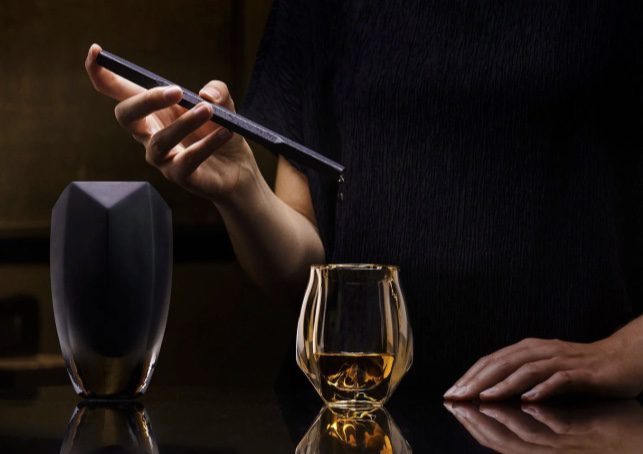
In the toolkit of a Master Blender, there is one instrument that is often overlooked by beginners but revered by experts: the whisky water dropper.
It seems unnecessary. Why buy a specific tool just to add water? Why not use a teaspoon, a jug, or just the tap?
The answer is Precision.
Whisky chemistry is volatile. A single drop of water can break surface tension and release a bouquet of floral esters. A teaspoon of water might be too much, drowning the spirit and killing the texture.
To find the “Sweet Spot,” you need control. You need to be able to add liquid one microliter at a time.
In this guide, we are going to explore the science of dilution, why spoons are the enemy, and review the most advanced whisky water dropper on the market today.
Table of Contents
Click below to jump to a section:
1. The Science: Why One Drop Matters
Many people think adding water is just about lowering the alcohol burn. While that is true, the chemical reaction is much more fascinating.
Whisky contains a molecule called Guaiacol. This molecule is responsible for the smoky, spicy, and aromatic flavor notes.
In a bottle at 46% ABV or higher, Guaiacol binds to the ethanol. It is trapped. It stays at the bottom of the glass.
The Exothermic Reaction:
When you add a drop of water using a whisky water dropper, two things happen:
- Viscimetric Whorls: You will see oily lines swirling in the glass. This is the water and alcohol separating.
- Release: Because Guaiacol hates water (hydrophobic), it rushes to the surface to escape the water drop.
This rush pushes the aroma molecules to the top of the glass, right where your nose is waiting. One drop literally “unlocks” the smell.
Drinking high proof? This tool is essential.
Read our guide to Cask Strength Whisky here.
2. Why You Should Never Use a Spoon
We have all done it. You dip a teaspoon into a water jug and try to drip a little bit into your scotch.
The Problem: Surface Tension.
Water likes to stick to metal. When you tilt a spoon, the water clings to the edge. It doesn’t drip; it pours.
Suddenly, instead of 2 drops, you have added 5ml of water.
For an old, fragile whisky (like a 30-year-old malt), this much water can “drown” it. The structure collapses, and it tastes flat. Once the water is in, you can’t take it out.
A whisky water dropper uses air pressure to release exactly one drop at a time, giving you total control.
3. Glass vs. Plastic Pipettes
If you are building a home bar, aesthetics matter.
Plastic Pipettes:
These are cheap and functional. They are often used in science labs. However, they look cheap. Using a plastic disposable tool with a $200 bottle of whisky ruins the ritual.
Glass Pipettes:
These are elegant. Hand-blown glass pipettes often feature a bulb at the top. They look beautiful sitting next to a Glencairn glass.
However, glass is fragile. If you drop it, it shatters. This has led to the rise of the “Premium” dropper made from metal.
Need other tools?
Check out our list of Home Bar Essentials.
4. Product Spotlight: The Norlan Drave
If you are looking for the absolute gold standard in this category, there is one tool that stands above the rest.
The Norlan Drave Water Pipette.
While most pipettes are simple glass tubes, the Drave is a piece of industrial design.
Why it is the Expert’s Choice:
- The Material: It is machined from a single piece of anodized aluminum. It feels heavy, cool, and substantial in the hand. It is virtually unbreakable compared to glass.
- The Mechanism: It doesn’t use a rubber bulb. Instead, it uses a precise aperture mechanism. You dip it in water, place your finger over the end to trap the liquid (using vacuum pressure), and lift.
- The Control: By slightly releasing your finger, you can dispense water with microscopic precision. It allows for a level of control that standard bulbs cannot match.
It also comes with a magnetic stand, meaning it hovers vertically on your bar top, keeping the tip clean and preventing it from rolling away. It turns the act of adding water into a piece of performance art.
5. The Ritual: How to Dilute Properly
Now that you have your whisky water dropper, how do you use it?
Follow the “Rule of Three”:
- Taste Neat: Always try the whisky at full strength first. Let your palate adjust to the ABV.
- Add One Drop: Use your pipette to add exactly one drop. Swirl the glass. Watch the oils separate. Nose it again. You will often find the “alcohol prickle” has vanished.
- The Sweet Spot: If it still feels tight or hot, add two more drops. Repeat until the flavor “blooms.”
Stop immediately once it tastes good. You can always add more water, but you can never take it out.
Want to master your palate?
Use our 5-Step Sensory Guide to identify the changes.
6. Summary: The Tool of a Pro
Buying a dedicated whisky water dropper might seem excessive to a casual drinker.
But if you are spending $80 or $100 on a bottle of Single Malt, spending $20 on a tool to unlock its full potential is a smart investment.
Whether you choose a simple glass pipette or the premium engineering of the Norlan Drave, the ability to control dilution is the mark of a true connoisseur.
Become a Certified Expert
Take your knowledge from “hobbyist” to “connoisseur.” Join our Virtual Whiskey Tasting VIP program and get guided lessons, rare bottle alerts, and tasting notes sent straight to your inbox.