

Scotch vs Japanese Whisky: The Student Becomes the Master? (2026)
Sip & Learn: Volume 55
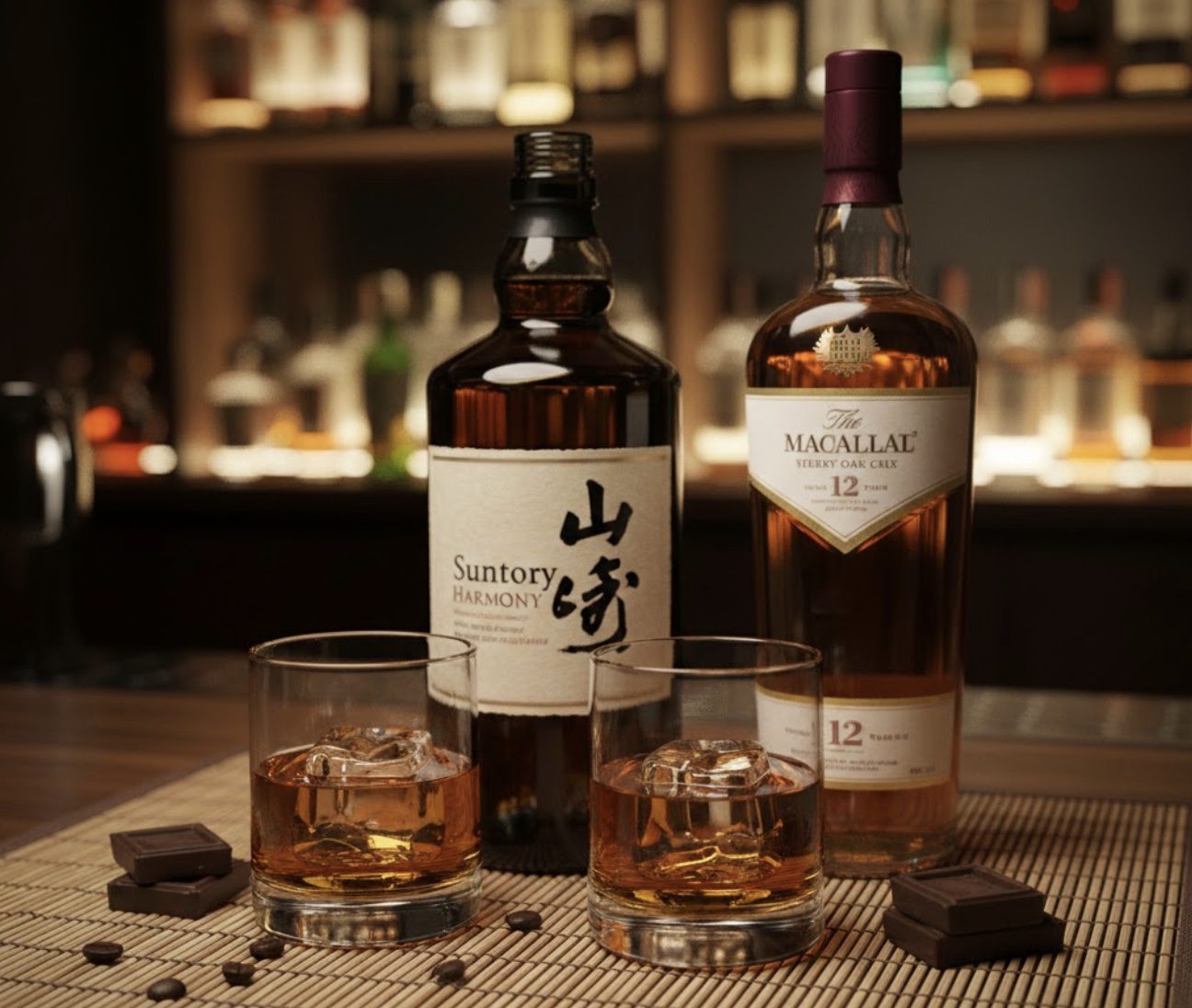
The rivalry of Scotch vs Japanese Whisky is the most fascinating story in spirits history.
For a century, Scotland was the undisputed king. Japan was the student.
But in the last two decades, the student has started winning the awards. Bottles like Yamazaki and Hibiki are now more expensive and harder to find than their Scottish counterparts.
To the untrained palate, they taste very similar. This is intentional. The fathers of Japanese whisky studied in Scotland and brought those techniques back to Kyoto.
However, there are deep philosophical and technical differences in how they are made.
In this guide, we are going to break down the Scotch vs Japanese Whisky debate, exploring the science of “Mizunara Oak,” the art of blending, and why one culture prizes “Robustness” while the other prizes “Harmony.”
Table of Contents
Click below to jump to a section:
1. The Shared DNA: Masataka Taketsuru
You cannot understand Scotch vs Japanese Whisky without knowing one name: Masataka Taketsuru.
In 1918, this young Japanese man traveled to Scotland to study chemistry at the University of Glasgow. He apprenticed at Longmorn and Hazelburn distilleries, taking detailed notes on everything from pot stills to coal firing.
He returned to Japan with a Scottish wife (Rita) and the secrets of Scotch production.
He helped found the Yamazaki distillery (for Suntory) and later founded his own distillery, Yoichi (for Nikka).
Because of this, Japanese whisky is legally and technically very similar to Scotch:
- Both use Malted Barley.
- Both use Copper Pot Stills.
- Both age their spirit in Oak barrels (often ex-Bourbon or Sherry).
- Both spell it “Whisky” (without the ‘e’).
Want to try the result of his work?
Check out our list of the Best Underrated Japanese Whiskies here.
2. The Production Split: Trading vs. Self-Reliance
Here is the single biggest technical difference between the two industries.
Scotland: The Trading System
In Scotland, Master Blenders trade stock.
If Johnnie Walker needs a smoky whisky for their blend, they can buy barrels from Caol Ila. If Chivas Regal needs a floral note, they can buy barrels from Glenlivet.
This means Scottish distilleries usually focus on making one specific style of Single Malt perfectly, because they can buy everything else they need.
Japan: The Closed System
In Japan, the major companies (Suntory and Nikka) are rivals. They do not trade.
If Suntory needs a smoky whisky for their Hibiki blend, they cannot buy it from Nikka. They have to make it themselves.
The Result: Japanese distilleries are incredibly versatile. One single distillery (like Yamazaki) might have 10 different shapes of pot stills, use 5 different yeast strains, and use both peated and unpeated barley.
They are “Self-Contained Ecosystems” capable of producing hundreds of different flavor profiles under one roof.
3. The Wood: What is Mizunara Oak?
While both countries use American Bourbon barrels and Spanish Sherry casks, Japan has a secret weapon.
Mizunara (Japanese Oak).
During World War II, Japan couldn’t import barrels, so they had to use local trees. Mizunara is notoriously difficult to work with. It grows crooked, it is porous, and it leaks.
However, if you leave whisky in Mizunara for 20 years, it creates a flavor that no other wood can replicate.
Mizunara Tasting Notes:
Sandalwood, coconut, incense, and temple spices. It gives Japanese whisky a distinct “Oriental” character.
Curious about wood influence?
Read our deep dive on Cask Maturation Science here.
4. Flavor Philosophy: Weight vs. Clarity
If we generalize the flavor profiles in the Scotch vs Japanese Whisky debate:
Scotch = Character & Weight
Scotch is often about “Terroir” and distinct character. An Islay whisky screams of smoke. A Speyside whisky screams of pears. The mouthfeel is often oily and substantial. It is designed to be robust.
Japanese = Harmony & Clarity
Japanese blenders pursue “Harmony” (Wa). They want a whisky where no single note shouts louder than the others.
Japanese whisky is often described as “transparent” or “glass-like.” It is incredibly refined, polished, and precise. It lacks the “rough edges” that some Scotch drinkers actually enjoy.
5. Culture: The Highball Factor
How the locals drink it shapes how it is made.
In Scotland, Single Malt is revered as a sipping spirit, often drunk neat or with a drop of water.
In Japan, whisky is largely consumed with food. Because of this, the most popular serve is the Highball (Whisky and Soda).
Japanese whiskies are chemically engineered to taste delicious when diluted with soda. The “clarity” of the spirit allows it to shine through the bubbles without clashing with delicate Japanese cuisine (sushi, tempura).
A heavy, oily Scotch might taste muddy in a highball, but a crisp Japanese blend (like Suntory Toki) tastes refreshing.
Making a Highball?
Ensure you have the right tall glass and clear ice.
6. Summary: Which Should You Buy?
The winner of Scotch vs Japanese Whisky depends on what you value.
Buy Scotch If:
– You want bold, aggressive flavors (especially peat smoke).
– You want value for money (Scotch is currently much cheaper for the age).
– You want variety and history.
Buy Japanese Whisky If:
– You value refinement, balance, and smoothness.
– You want a whisky that pairs perfectly with food.
– You enjoy the exotic notes of sandalwood and incense.
Ultimately, the student (Japan) has learned everything the master (Scotland) had to teach, and then refined it. Both belong on your shelf.
Ready to explore Scotland?
Start with our guide to the 5 Best Single Malts for Beginners.
Become a Certified Expert
Take your knowledge from “hobbyist” to “connoisseur.” Join our Virtual Whiskey Tasting VIP program and get guided lessons, rare bottle alerts, and tasting notes sent straight to your inbox.