

Whisky Stones vs Ice: Do They Actually Work? (2026 Guide)
Sip & Learn: Volume 45
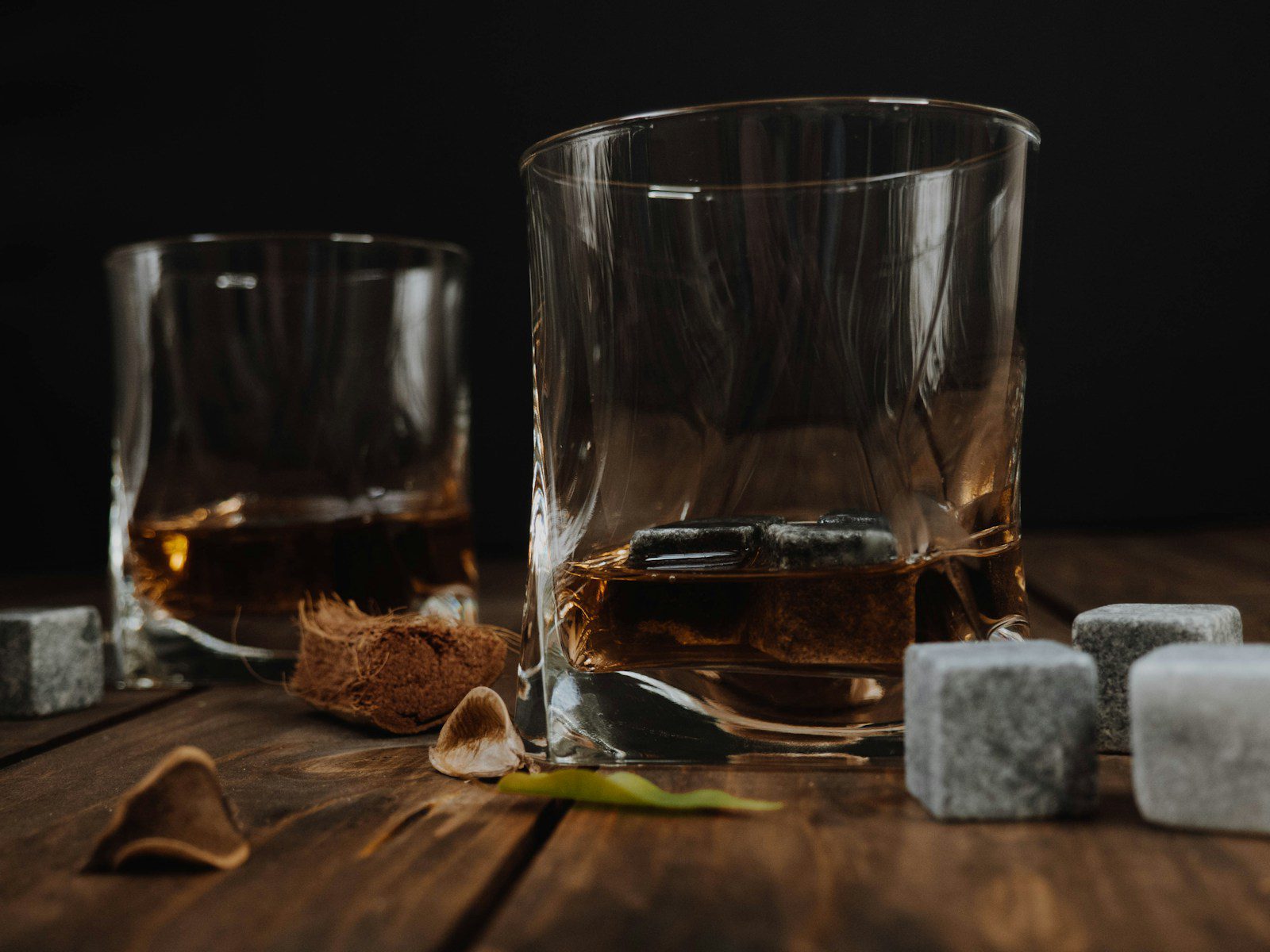
If you receive a gift set from a well-meaning relative, it almost always contains one specific item: Whisky Stones.
These small cubes of soapstone or stainless steel promise the impossible. They claim to chill your drink perfectly without diluting it with water.
On paper, it sounds like the perfect solution. Nobody wants a watery Scotch.
However, if you walk into a high-end whisky bar, you will never see a bartender using them. Why?
The debate of Whisky Stones vs Ice comes down to basic physics. One is an effective coolant; the other is mostly a marketing gimmick.
In this guide, we are going to break down the thermodynamics of cooling so you can decide if those rocks belong in your glass or in the trash.
Table of Contents
Click below to jump to a section:
1. The Physics: Why Ice Cools Better
To understand the winner of Whisky Stones vs Ice, you need to understand “Phase Change.”
Cooling isn’t just about temperature differences. It is about the energy required to change a solid into a liquid.
The Latent Heat of Fusion:
Ice absorbs a massive amount of heat from your whisky to turn itself into water (melting). This absorption of heat is what chills your drink rapidly.
The Problem with Stone:
Stones do not melt. They do not change phase. They simply sit there and absorb a tiny amount of heat until their temperature matches the liquid.
The Science:
Water has a high “Specific Heat Capacity” (4.18 J/g). Soapstone has a very low capacity (0.98 J/g). This means gram-for-gram, ice is 4 times more effective at cooling than stone.
2. The Case for Whisky Stones
If they are scientifically inferior, why do people buy them?
They do have one specific advantage: Zero Dilution.
If you have a very old, low-ABV whisky (like a 40% blend from the 1970s) that is already fragile, adding water might destroy the structure. In this very specific case, you might want to cool it slightly without adding water.
The Pros:
– No water added.
– Reusable (eco-friendly).
– They look interesting in the glass.
The Cons:
– They don’t get the drink very cold (maybe 5 degrees drop max).
– They are heavy and can chip your teeth if you aren’t careful.
– They can scratch delicate crystal glassware.
Worried about scratching your glass?
Check out our guide to the Best Whisky Glasses (and how to care for them).
3. The Case for Ice (Dilution is Good)
In the Whisky Stones vs Ice debate, purists often argue that “water ruins whisky.” This is false.
Water is an ingredient.
When ice melts, the water mixes with the ethanol. This lowers the ABV, which reduces the “alcohol burn” on your nose. More importantly, it creates an exothermic reaction that releases hydrophobic (water-hating) flavor compounds.
Suddenly, a tight, closed-off whisky will smell like vanilla, fruit, and flowers.
The Pros:
– Chills the drink effectively.
– Releases hidden aromas.
– Makes high-proof whisky easier to drink.
The Cons:
– If you use small “hotel ice,” it melts too fast and turns your drink into water.
4. The Middle Ground: Large Clear Ice
So, how do we get the cooling power of ice without ruining the drink with too much water?
The answer is Surface Area.
You need to use a single, large Ice Sphere or a 2-inch Ice Cube.
A large block of ice has less surface area exposed to the liquid compared to a handful of small chips. This means it chills the drink thoroughly but melts very, very slowly.
This gives you the best of both worlds: a cold drink, a little bit of water to open the flavor, but not enough to drown it.
Pro Tip: Clear Ice
Use “Directional Freezing” molds to make clear ice. Cloudy ice is full of air bubbles, which makes it melt faster. Clear ice is denser, colder, and melts slower.
Want to use ice in a cocktail?
See how large ice improves an Old Fashioned here.
5. Alternative: Fridge vs. Freezer
If you absolutely hate dilution but love cold drinks, there is a third option.
Put the bottle in the fridge.
While you should never freeze good whisky (it kills the flavor entirely), keeping a cheap blending whisky in the fridge is acceptable if you just want a cold nip.
However, be warned: Cold suppresses flavor.
If you chill a $100 Single Malt, you are muting the nuances you paid for. It will taste thin and flavorless until it warms up in your mouth.
6. Summary: The Verdict
So, who wins the Whisky Stones vs Ice battle?
The Winner: Large Ice.
It cools effectively, it adds a necessary touch of water to open the bouquet, and it looks great.
The Loser: Whisky Stones.
They simply do not work well enough to justify the risk of chipping your teeth or scratching your glass. Leave them in the freezer and reach for a proper ice mold instead.
Become a Certified Expert
Take your knowledge from “hobbyist” to “connoisseur.” Join our Virtual Whiskey Tasting VIP program and get guided lessons, rare bottle alerts, and tasting notes sent straight to your inbox.