
Bourbon vs Scotch: The 4 Main Differences Explained (2026)
Sip & Learn: Volume 41
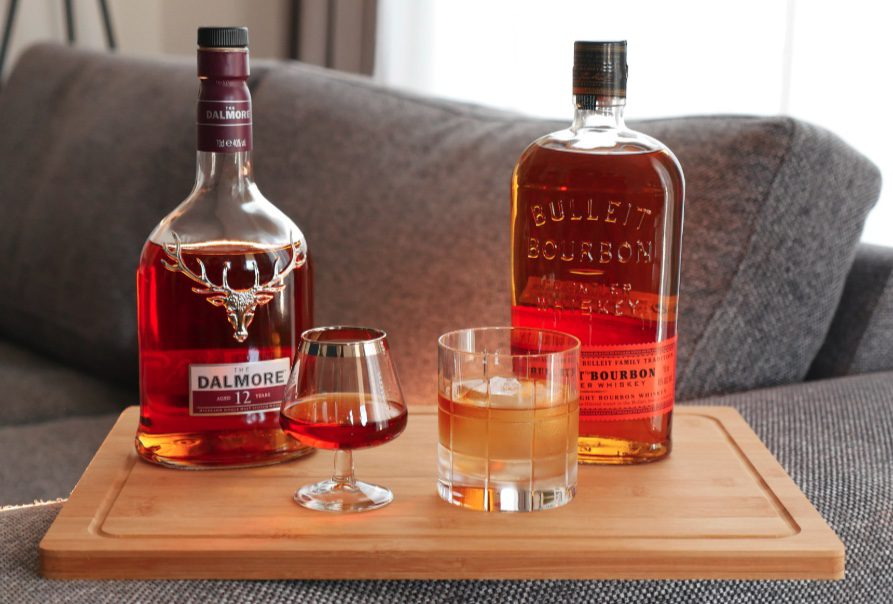
The battle of Bourbon vs Scotch is the biggest rivalry in the spirits world.
They are the two titans of whisky. They both have legions of obsessive fans. They are both aged in oak. But they taste completely different.
If you give a glass of Bourbon to a Scotch drinker, they might find it too sweet and cloying.
If you give a glass of smoky Scotch to a Bourbon drinker, they might ask if the bar is on fire.
To navigate the menu in 2026, you need to understand the fundamental differences. It comes down to four main pillars: Geography, Grain, Distillation, and Wood.
In this guide, we are breaking down the Bourbon vs Scotch debate so you know exactly which bottle belongs on your shelf.
Table of Contents
Click below to jump to a section:
1. Geography: USA vs. Scotland
The first and most obvious difference in Bourbon vs Scotch is where it is made.
Bourbon (United States)
By law, Bourbon can be made anywhere in the United States. However, 95% of the world’s supply comes from Kentucky.
Kentucky has a limestone shelf that filters the water, removing iron and adding calcium. This creates the perfect water for fermentation.
Climate Impact: Kentucky has hot summers and cold winters. This extreme temperature swing forces the whisky in and out of the wood rapidly. Bourbon ages fast.
Scotch (Scotland)
By law, Scotch must be distilled and matured in Scotland for a minimum of 3 years.
Climate Impact: Scotland is cool and damp. The temperature is consistent. This allows the whisky to age slowly and gently over decades without evaporating too quickly.
2. Grain: Corn vs. Barley
The base ingredient dictates the core sweetness of the spirit.
Bourbon = Corn
Bourbon must be made from at least 51% Corn. Corn has high sugar content. This gives Bourbon its signature sweet, round, caramel flavor.
Single Malt Scotch = Barley
Single Malt Scotch must be made from 100% Malted Barley. Barley is nutty, biscuity, and cereal-forward. It is less sweet than corn, offering a more savory, dry profile.
Want to try the best corn-based whiskey?
Check out our list of the 5 Best Bourbons for Beginners here.
3. Distillation: Column vs. Pot
The shape of the still changes the texture of the liquid.
Bourbon (Column Stills)
Most Bourbon is distilled in a Column Still (a tall industrial tower).
This is an efficient, continuous process. It strips the alcohol to a higher proof efficiently but can remove some of the heavier oils. However, because Bourbon uses new oak (see below), it gains its heavy texture from the barrel, not the still.
Scotch (Pot Stills)
Single Malt Scotch must be distilled in a Copper Pot Still (onion shape).
This is an inefficient batch process. It leaves behind more “congeners” (flavor compounds) and heavy oils. This gives Scotch a distinct weight and character before it even touches a barrel.
4. Maturation: The Biggest Flavor Driver
If you only remember one thing about Bourbon vs Scotch, make it this. The barrel rules are completely different.
Bourbon: New Oak Only
By law, Bourbon must be aged in New, Charred Oak Barrels.
“New” means the barrel has never been used before. The wood is full of fresh flavor chemicals (Vanillin and Oak Lactones).
The Result: An explosion of vanilla, coconut, caramel, and toffee. The flavor is intense and sweet.
Scotch: Used Oak
Scotch distilleries mostly use Second-Hand Barrels.
In fact, they buy the used barrels from the Bourbon industry! Because the wood has been used once, the intense vanilla flavor has been calmed down. This allows the delicate flavor of the barley (or peat smoke) to shine through.
The Result: A more subtle, complex spirit where you can taste the grain, the fruit, and the smoke, not just the wood.
Why is some Scotch dark red? They use Sherry casks.
Read our guide on Sherry Casks here.
5. The Spelling: E vs No-E
Finally, there is the grammar.
- United States: Spells it WhiskEy.
- Scotland: Spells it Whisky.
This is a strict rule. If you write “Scotch Whiskey” (with an e), you will annoy every Scotsman you meet.
An easy trick to remember: If the country name has an E in it (United States), they use the E. If it doesn’t (Scotland), they don’t.
6. Summary: Bourbon vs Scotch
So, which one should you buy?
Choose Bourbon If:
– You have a sweet tooth.
– You love vanilla, caramel, and dessert flavors.
– You want a spirit that is consistent and approachable.
Choose Scotch If:
– You prefer savory, nutty, or fruity flavors.
– You are interested in “Peat Smoke” (like Laphroaig).
– You want to explore a huge variety of regional styles.
Ready to explore Scotch?
Check out our list of the 5 Best Single Malts for Beginners here.
Become a Certified Expert
Take your knowledge from “hobbyist” to “connoisseur.” Join our Virtual Whiskey Tasting VIP program and get guided lessons, rare bottle alerts, and tasting notes sent straight to your inbox.